
Bouncy Castles: Commercial Guide for Events & Brands
Table of Contents
- Introduction
- What Are Bouncy Castles And How Do They Work?
- How Have Bouncy Castles Evolved Over Time?
- What Types Of Commercial Bouncy Castles And Inflatables Are Available?
- Commercial Vs. Residential Bouncy Castles: What Is The Difference?
- Materials And Manufacturing: How Are Commercial Bouncy Castles Built?
- Safety Standards And Risk Management For Bouncy Castles
- How To Choose The Right Commercial Bouncy Castle For Your Event Or Brand
- Where And How Are Bouncy Castles Used Across Industries?
- Custom Branding Options And Working With A Commercial Inflatable Manufacturer
- Maintenance, Storage, And Total Cost Of Ownership
- To Sum Up
- Frequently Asked Questions
- Question: What Makes A Bouncy Castle “Commercial-Grade” Instead Of Residential?
- Question: How Long Do Commercial Bouncy Castles Typically Last With Proper Care?
- Question: What Information Do I Need Before Ordering A Custom Bouncy Castle?
- Question: Can One Bouncy Castle Design Work Across Different Events And Campaigns?
- Question: How Do I Plan Power And Space Requirements For Bouncy Castles At My Venue?
- Question: Are Bouncy Castles Safe For Indoor Events Like Malls Or Convention Centers?
- Question: Should I Rent Or Buy Commercial Bouncy Castles For My Brand Or Agency?
Introduction
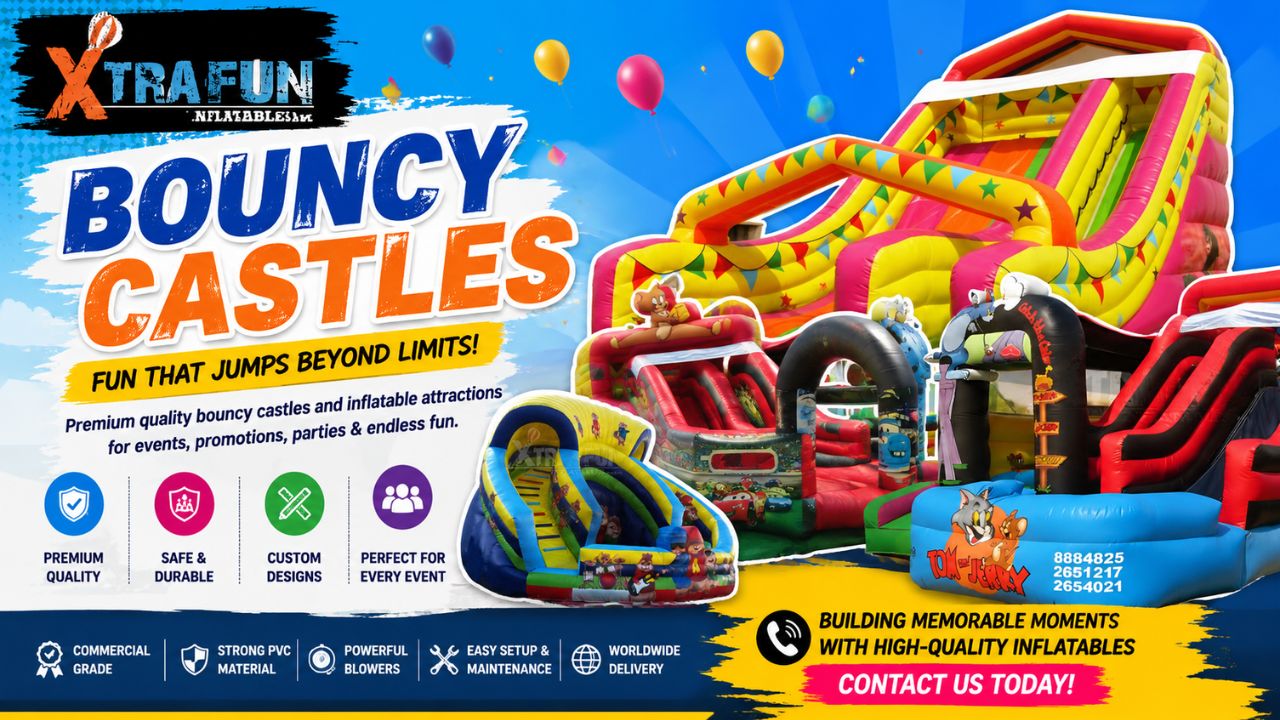
Bouncy castles are large inflatable play structures made from strong PVC or vinyl, filled with air and used for jumping and sliding fun. In commercial form, bouncy castles come in many types, including classic jumpers, combo units, obstacle courses, and inflatable slides. To pick the right model, you match the design to your audience, venue, and goals. When buying a commercial inflatable, you look closely at materials, safety features, manufacturer quality, and long‑term cost.
These inflatables are now a favorite attraction at events across the world because they mix fun, color, and high visibility in a single piece of equipment. For brands, agencies, malls, schools, and sports organizations, commercial bouncy castles can act as crowd magnets and three dimensional billboards.
This guide explains the main types of commercial bouncy castles, where they are used, how they are built, and how to run them safely. It also walks through buying decisions, custom branding options, upkeep, and why working with a proven manufacturer like Xtrafun Inflatables protects both your budget and your reputation.
Key Takeaways
Key takeaways from this guide give busy marketing and event teams a fast overview before they go deeper. They highlight how commercial bouncy castles support brand goals, what types exist, and how to choose and run them safely. They also show where a specialist manufacturer such as Xtrafun Inflatables fits into your long‑term strategy.
-
Commercial bouncy castles as strategic brand assets turn play areas into visible, interactive media. They pull families toward your footprint, hold attention, and create natural photo moments. When designed with logos, colors, and simple taglines, they work like giant, friendly billboards that people actually line up to use.
-
Key types of bouncy castles and when to use each depend on your goals. Jumper Bouncy Castles handle high‑volume kid zones and family days. Combo Bouncy Castles, Obstacle Bouncy Castles, Inflatable Slides, Mini Bouncy Castles, and Inflatable Games each suit different footprints, age mixes, and engagement targets.
-
Safety, standards, and risk management for inflatables must sit at the center of planning. Commercial grade units, proper anchoring, weather rules, trained staff, and clear signage all reduce incident risk. Working with a proven commercial inflatable manufacturer supports compliance with guidance from groups such as the Consumer Product Safety Commission.
-
Choosing and specifying the right commercial unit means looking at audience, venue, throughput, budget, and lifespan. A simple framework helps teams decide whether to rent, buy stock commercial inflatables, or commission custom builds. That same framework guides decisions on size, type, and number of units.
-
Partnering directly with a commercial inflatable manufacturer such as Xtrafun Inflatables brings consistent material quality, engineering, and branding flexibility. Instead of one‑off rentals, you gain reusable assets, design support, compliance documents, and maintenance guidance that support campaigns for many seasons.
“Inflatables are more than toys at an event—they’re high‑impact structures that represent your brand in front of families. Treat them with the same seriousness you give to a stage or exhibit booth.”
— Operations Team, Xtrafun Inflatables
What Are Bouncy Castles And How Do They Work?
At Xtrafun Inflatables, we define commercial bouncy castles as heavy-duty inflatable structures engineered for high-traffic events, rental businesses, and branded activations — built to perform far beyond anything a backyard toy can offer.
According to Magic Jump, most modern commercial inflatables use a constant airflow system powered by electric blowers. That design, combined with heavy duty PVC, lets a single unit entertain thousands of users over its lifespan when operated correctly.
Defining Bouncy Castles In A Commercial Context
In a commercial context, bouncy castles are inflatable play structures built for repeated heavy use at public events, sponsored activations, schools, and amusement venues. They are also called bounce houses, moonwalks, jumping castles, or closed inflatable trampolines, depending on region and style. Typical pieces include:
-
A bounce floor
-
Inflatable columns or walls
-
Safety netting
-
An entry ramp
-
Optional slides or climbing features
Jumper Bouncy Castles focus on pure jumping space and quick turnover, which suits corporate family days, fairs, and mall events. Combo Bouncy Castles add slides, hoops, or small obstacles inside one footprint to keep visitors inside longer. Obstacle Bouncy Castles and Inflatable Slides introduce race and height elements that appeal strongly to older kids, teens, and adults.
These products sit inside a broader inflatable play set that can also include Inflatable Games, inflatable arches, tunnels, giant mascots, and POS or POP displays. Consumer backyard inflatables sold on marketplaces are usually much smaller, lighter, and built for a handful of children at a time. By contrast, commercial bouncy castles use thick PVC and reinforced seams so they can handle long queues and strict safety checks at brand events.
How Constant-Airflow Inflatable Bouncy Castles Operate
Constant airflow inflatable bouncy castles stay firm because an electric blower pushes air into the body all the time. Air escapes slowly through seams and tiny gaps, so the structure keeps its shape as long as the blower is on. Commercial units often use blowers in the 1 to 2 horsepower range, drawing around 1.5 to 2 kilowatts, which matters when you plan power distribution and generator capacity.
Most commercial PVC bouncy castles include internal baffles that help spread air evenly through floors, walls, and turrets. High‑stress areas such as entrances and slide joints use extra layers of fabric and stitching so they keep their form under heavy use. Strong anchor points around the base connect to stakes or ballast that stop the inflatable shifting in wind or under side loads from crowds.
Because air is always moving, a small puncture is rarely an emergency. The blower keeps pressure up while staff clear users and apply a patch later. The only sudden risk comes from a total power cut, which is why planners place blowers away from trip hazards and add devices like watchdog sirens that sound an alarm if power fails.
Tip from Xtrafun technicians:
“Always have a spare blower and an extension cord rated for the load. Power redundancy is one of the cheapest forms of risk reduction for inflatables.”
How Have Bouncy Castles Evolved Over Time?
From humble backyard novelties in the 1960s to essential commercial event infrastructure, bouncy castles have transformed dramatically. At Xtrafun Inflatables, we have been at the forefront of this evolution for over 2 decades, engineering advanced inflatable attractions trusted by brands, sports properties, and venues worldwide.
Growth in awareness through retail and rental channels has gone hand in hand with higher safety expectations and more detailed regulations. Research from The Pew Charitable Trusts notes that about half of US states now regulate inflatables as amusement rides, which pushes the industry toward more professional standards.
From Backyard Fun To Commercial Event Infrastructure
Early inflatable amusements were simple bounce pads set up by pioneering rental operators for birthday parties and small fairs. As popularity grew, party rental companies invested in more themes and sizes, which made bouncy castles a standard feature of kids’ celebrations. Over time, customers started asking for them at school fairs, community festivals, and church events, which raised the stakes on safety and reliability.
As demand for larger events appeared, manufacturers began building heavy duty bouncy castles with thicker PVC, stronger seams, and better anchoring systems. Inflatable slides and water slides followed, adding height and visual impact that worked well at fairs and seasonal events. Eventually, long inflatable obstacle courses and multi zone inflatable parks emerged, giving planners more ways to design full play zones around their venues.
With this growth, inflatables stopped being just party extras and started to function as semi permanent entertainment infrastructure in malls, amusement parks, and indoor arenas. Event owners saw that, with commercial designs and regular inspections, a single inflatable asset could serve thousands of visitors each year.
The Rise Of Branded And Custom Bouncy Castles
As experiential marketing expanded, brands realized that inflatable attractions offered huge, flexible surfaces for logos and themes. It became common to see corporate colors and mascots wrapped around bouncy castles at product launches, sports fan zones, and retail parking lot events. Sponsors of races and tournaments added inflatable arches, tunnels, and product replicas to frame start lines and stage entrances.
Custom bouncy castles now often feature fully themed facades that match campaigns, whether that means a tropical island for a travel brand or a sports arena for a fitness sponsor. Branded Inflatable Slides act as dramatic centerpieces at summer festivals, while Inflatable Games carry slogans or taglines that tie into contests. According to Magic Jump, complex combo units can include several game types in one piece, which makes them ideal for multi sponsor zones.
Xtrafun Inflatables is part of this shift from generic party inflatables to reusable brand assets. With more than two decades of experience across 45 plus export markets, the company designs commercial grade structures intended for repeated campaigns rather than one‑time décor. That approach supports more consistent branding, lower cost per impression, and safer experiences for visitors of all ages.
What Types Of Commercial Bouncy Castles And Inflatables Are Available?
According to Pediatrics, inflatable amusements became far more common between the mid 1990s and 2010, which helps explain the wide variety of designs on the market today, and a “Hire Wacky World” dataset published on IEEE DataPort offers a real-world snapshot of the breadth of inflatable hire options now available commercially. That variety is a strength when you know what each format does best.
Core Bouncy Castle Categories For Events And Brand Activations
Classic Jumper Bouncy Castles provide an open jump area enclosed by inflatable columns and mesh walls. They work well when you expect many young children and want fast, predictable throughput, such as at school carnivals, community days, and quick stop retail promotions. With clean color schemes and removable banners, they suit both single brand and multi sponsor footprints.
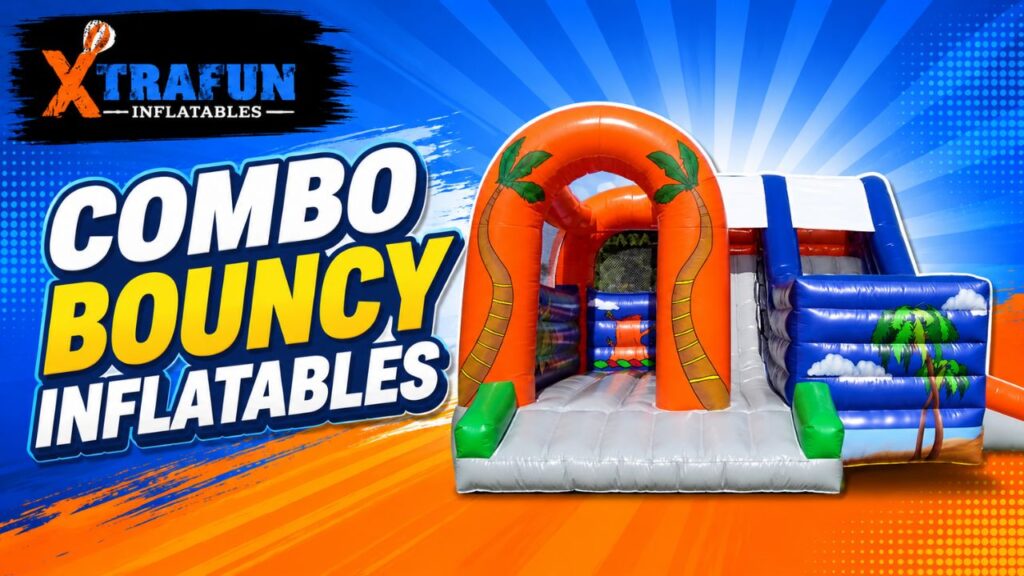
Combo Bouncy Castles add extra features like small slides, interior climbs, basketball hoops, or pop‑up obstacles. They fit festival kids’ zones, corporate picnics, and sponsor villages where you want children to stay engaged longer inside the unit. Because combos pack several play modes into one footprint, they give marketing teams more surfaces for logos and themes without needing extra space.
Obstacle Bouncy Castles stretch play into a race format, usually with two lanes that let visitors compete side by side. These pieces shine at sports events, fun runs, and team building days, where you can run timed heats or friendly department races. Inflatable Slides, both dry and water, serve as tall visual anchors for summer events, beach activations, and theme park promotions.
Mini Bouncy Castles shrink the concept into a compact form that fits mall atriums, school gyms, and limited outdoor pads. They let you bring inflatables into more controlled or premium spaces without overpowering the venue. Inflatable Games, such as soccer shots, basketball tosses, gladiator duels, or carnival style booths, create focused skill stations that fit sampling lines, sponsor villages, and POS areas. Get to know more about our range of mini bouncy castles, click here.
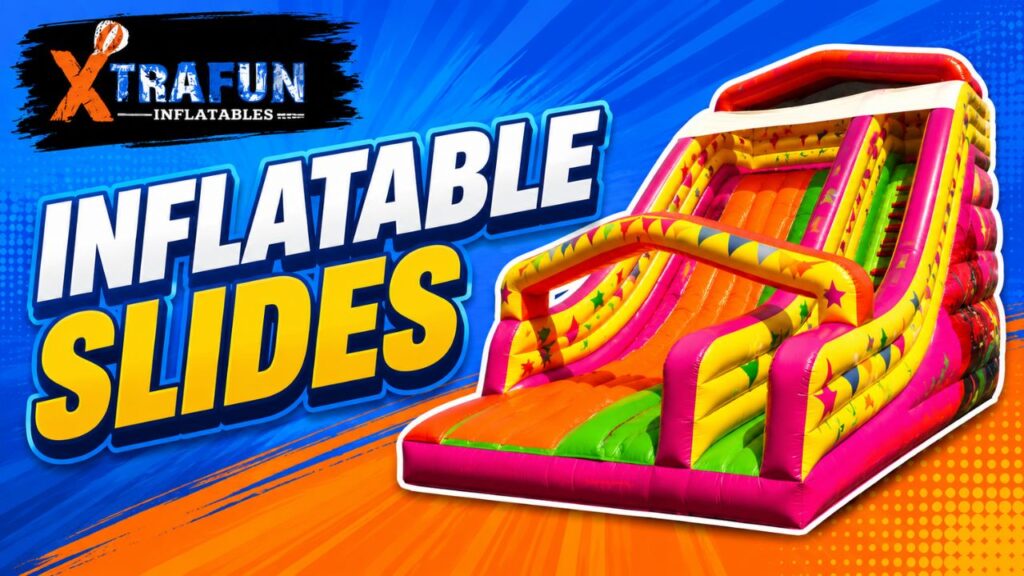
Inflatable Slides from Xtrafun deliver towering, thrilling descents that draw instant crowd attention and keep energy levels soaring at any event.
At large events, planners often combine several of these categories into a mini inflatable park. For example, a sponsor might place a Combo Bouncy Castle and a small slide for younger children, an Obstacle Bouncy Castle for older kids and teens, and a ring of Inflatable Games for quick contests and lead capture.
Comparison Table: Which Bouncy Castle Type Fits Which Goal
The table below compares common commercial inflatable types to help you match them to goals and venues.
| Type | Ideal Audience | Footprint Size | Engagement Level | Best For | Typical Event Types |
|---|---|---|---|---|---|
| Jumper Bouncy Castles | Younger kids and families | Small to medium | Short repeat visits | High volume family fun, awareness | School fairs, corporate family days, mall events |
| Combo Bouncy Castles | Kids and tweens, mixed families | Medium | Longer stay time | Engagement, sponsor zones | Festivals, brand tours, themed community events |
| Obstacle Bouncy Castles | Older kids, teens, adults | Long linear or modular | High energy races | Competitive campaigns, content | Fun runs, sports fan zones, team building days |
| Inflatable Slides | Wide age range | Tall plus run‑out area | Thrill moments | Visual centerpiece, summer tie‑ins | Beach promos, fairs, resort or water brand events |
| Mini Bouncy Castles | Younger kids in tight spaces | Very compact | Short supervised play | Indoor activations, controlled sites | Malls, convention centers, school gyms |
| Inflatable Games | All ages | Compact to medium | Quick repeat play | Lead capture, sampling, contests | Retail promos, sponsor villages, stadium concourses |
Xtrafun Inflatables offers all of these product families, which allows marketing and event teams to build coherent footprints around a single provider. That simplifies branding, logistics, and safety oversight across different event types.
Commercial Vs. Residential Bouncy Castles: What Is The Difference?
At Xtrafun Inflatables, we build commercial-grade bouncy castles engineered for high-traffic public events, not backyard afternoons. The difference in materials, safety ratings, and duty cycle is significant, and choosing wrong puts your brand and guests at risk.
Research summarized by the Consumer Product Safety Commission shows steady growth in inflatable related injuries as usage expanded, which highlights the need to match product type to environment. Using backyard toys in public event settings pushes them far beyond their design limits.
Key Distinctions In Materials, Design, And Duty Cycle
Residential inflatables sold on large retail platforms usually use thin nylon or oxford fabrics for main walls and lighter grade PVC on key wear areas. Blowers are smaller, often under 500 watts, and intended for a few hours of weekend use by a handful of children. Weight and occupancy limits are low, and many models lack strong anchor points or formal manuals.
Commercial bouncy castles use much thicker PVC or vinyl, often 15 to 18 ounce coated fabrics or heavier, for bounce floors and structural walls. Seams are double or quadruple stitched, and anchor points are made from webbing and reinforced patches so they can take high side forces. Blowers rated at 1 to 2 horsepower push plenty of air to handle steady lines of users for full event days.
Visually, consumer units lean toward cartoon heavy designs with limited room for logos, which may clash with premium brand guidelines. Commercial bouncy castles and Inflatable Slides usually use cleaner lines and color blocks that can match corporate identities, sports teams, or sponsor artwork. This difference matters when planning activations for high profile brands.
Why Commercial-Grade Bouncy Castles Are Non-Negotiable For Events
For public events, commercial grade bouncy castles are the only responsible choice because they are engineered with higher safety margins and documented standards. A 2012 study in Pediatrics estimated about 31 US children per day were treated in emergency departments for inflatable related injuries in 2010, and Incidence and direct medical costs research further illustrates the financial and health burden these injuries impose. Many of those incidents involved falls or collisions inside units that might not have met strong commercial design practices.
State regulators often expect amusement ride style documentation, including engineering drawings, fire retardant certificates, and operating manuals, as outlined in the Consumer Safety Specification for Constant Air Inflatable Play Devices published by ASTM International. Professional manufacturers such as Xtrafun Inflatables design products to meet relevant ASTM or EN standards and supply paperwork that supports inspections and permits. Cheap residential inflatables rarely come with that level of detail.
From a brand perspective, deploying a low end home unit at a corporate or sports event sends the wrong signal. It suggests cost cutting on safety and experience, which can damage trust if an incident occurs. Using commercial bouncy castles from a partner like Xtrafun helps align your physical experience with the care you show in every other part of your brand.
“Parents notice the build quality the moment their child steps onto a unit. Commercial grade inflatables show that you take safety and professionalism seriously.”
— Senior Event Planner, National Retail Chain
Materials And Manufacturing: How Are Commercial Bouncy Castles Built?
At Xtrafun Inflatables, we engineer every commercial bouncy castle from raw material selection through to finished product, ensuring every piece we ship worldwide meets the highest standards of durability and performance.
Understanding the build process helps marketing and procurement teams judge quotes, compare suppliers, and justify investments to internal stakeholders. It also explains why some inflatables cost more upfront yet pay off over many events.
High-Strength Materials And Structural Design
Commercial inflatables use heavy PVC or vinyl for all high‑stress zones such as floors, walls, steps, and slide lanes, and research on Detection of Material Fatigue in PVC highlights why material quality matters for bouncy castle applications. These coated fabrics resist punctures, stretching, and abrasion while allowing sharp digital printing for logos and graphics. UV resistant inks and coatings help keep colors bright after many hours in sun at parking lot events or open fields.
Fire retardant treatments and cleanable surfaces matter for indoor venues and repeated use. Many malls, convention centers, and school districts require proof of fire resistance as part of their approval process. Smooth PVC surfaces allow event crews to wipe down units between sessions, which supports hygiene and protects brand perception.
Inside each bouncy castle, internal baffles divide the space into chambers that spread air load and keep floors and walls firm. High‑stress corners, slide transitions, and entrance ramps use extra strips of fabric and dense stitching to resist tearing under side loads. Anchor points connect to webbing that wraps deep into the body of the inflatable, which helps the unit stay put in gusty wind when combined with proper staking or ballast.
From Concept To Finished Bouncy Castle: Xtrafun Fabrication Process
When clients approach Xtrafun Inflatables, the process starts with a detailed requirements discussion. Teams share campaign objectives, target audiences, venue types, safety rules, and branding needs. Planners also describe expected throughput and season length, which informs decisions on size, materials, and complexity.
Designers then build scaled layouts that show footprints, entry and exit flows, and positions of features such as slides or game stations. For mascots, product replicas, or themed Combo Bouncy Castles, 3D modeling helps capture exact shapes and proportions that match brand assets. Graphic designers match Pantone colors, place logos for maximum visibility in photos, and plan spots for hashtags or QR codes.
Once designs are approved, manufacturing teams:
-
Cut PVC panels using patterns derived from the 3D models.
-
Weld or sew seams and install internal baffles.
-
Attach anchor points, netting, zippers, and blower tubes.
-
Apply printed panels and finishing details.
-
Inflate and inspect every commercial bouncy castle before packing to check stitching, print quality, and airflow.
That TQM style approach, combined with two decades of export experience, helps Xtrafun ship reliable inflatables to clients in more than 45 countries.
Safety Standards And Risk Management For Bouncy Castles
At Xtrafun Inflatables, we believe safety is the foundation of every great event. This section breaks down the regulatory landscape, injury data, and practical risk management steps that keep your inflatable activations compliant and crowd-ready.
According to the Consumer Product Safety Commission, inflatable amusements saw a steep rise in injuries between the mid 1990s and early 2010s as units spread into many settings. That trend makes it even more important for corporate and municipal buyers to work with experienced suppliers and to follow structured procedures.
Understanding Regulations, Standards, And Injury Risks
The United States has no single nationwide law for inflatable amusements, so rules vary by state. Many states treat bouncy castles like amusement rides, requiring annual inspections, permits, and proof of liability insurance. Reports from The Pew Charitable Trusts describe how states such as Pennsylvania, New Jersey, and North Carolina review designs and track incident data.
Studies cited by Pediatrics estimate around 65,000 US children under 17 were treated for inflatable related injuries from 1990 to 2010, a pattern further supported by Frontiers | Injury incidence, research examining determinants and burden among children aged 0–17 years. About 88 percent of those injured were under 15, with common issues including fractures, sprains, and bruises from falls or collisions, consistent with findings in the Injury epidemiology of inflatable amusement devices study published by the International Journal of Emergency Medicine. Separate research referenced by The Pew Charitable Trusts notes at least 64 wind related inflatable accidents worldwide between 2000 and 2016, causing 271 injuries and 10 deaths.
These figures show why corporate, school, and municipal buyers face high scrutiny when they bring bouncy castles onto their grounds. Vendors must back up their claims with design calculations, fire certificates, manuals, and insurance records. Xtrafun Inflatables designs to recognized standards such as ASTM guidance for inflatables and supplies clients with documents that support permitting, inspections, and internal risk reviews.
Best-Practice Safety Protocols For Event Bouncy Castles
Safe operation starts with thoughtful site planning. Teams review surface type, clearances from fences and overhead lines, and ways people will queue and exit. Anchoring plans specify stake types for grass and ballast for hard surfaces, along with redundant tethers for tall Inflatable Slides and Obstacle Bouncy Castles.
Weather policies are another core tool. Many safety advisers suggest shutting inflatables when steady wind reaches a defined speed and long before storms or lightning. Staff need clear rules on who calls a shutdown, how to clear users calmly, and how to deflate units quickly while keeping exits safe. Watchdog blower alarms and GFCI protected circuits help signal power loss and reduce electric shock risk.
Operating rules should be posted at each unit and repeated by attendants. Common rules include:
-
No shoes, food, drinks, or sharp objects
-
No flips, wrestling, or rough play
-
No mixing very small children with older kids or adults
-
Respect posted maximum occupancy limits
Staffing plans assign at least one trained attendant per mid‑size unit and more for large slides or long obstacle courses, with radios linking them to event control.
Vendor selection might be the most important safety decision brands make. Teams should ask for manuals, inspection records, and insurance certificates, and they should prefer suppliers that refuse to operate in unsafe weather. Xtrafun Inflatables supports this by designing safe hardware and by advising clients on staffing ratios, operating procedures, and documentation that align with CPSC guidance.
Safety reminder:
“The safest inflatable is the one you decide not to operate when conditions are marginal. Have a clear stop rule—and stick to it.”
How To Choose The Right Commercial Bouncy Castle For Your Event Or Brand
At Xtrafun Inflatables, we help clients cut through the options with a straightforward selection framework. Match your event goals, audience profile, and site constraints to the right product — whether that’s a Combo Bouncy Castle, Mini Bouncy Castle, or Inflatable Game.
By following a repeatable process, agencies and brand teams can compare options side by side, defend budgets, and brief vendors clearly. That reduces surprises on site and helps avoid last‑minute changes that add cost.
Step-By-Step Selection Framework For B2B Buyers
A clear selection framework starts with your goals rather than favorite products. When you define what success looks like, it becomes easier to pick bouncy castles and inflatables that genuinely support those outcomes. The six steps below fit most corporate, sports, and retail scenarios.
-
Define objectives before talking about specific units. Decide whether you care most about pure awareness, time spent in your zone, data capture, hospitality, or sponsor visibility. Awareness might point you toward tall Inflatable Slides or arches, while data capture might favor Inflatable Games with simple scoring and registration.
-
Analyze your audience and attendance profile in detail. Look at age ranges, family mix, and expected peak periods during each event day. Younger families may call for more Jumper Bouncy Castles and Mini Bouncy Castles, while teens and adults respond strongly to Obstacle Bouncy Castles and competitive Inflatable Games.
-
Assess venue and logistics with your operations team. Confirm whether spaces are indoors or outdoors, what surface types you have, and how much electrical power is available. Narrow corridors, low ceilings, or limited loading docks may steer you toward compact combo units from Xtrafun Inflatables instead of very tall slides or long obstacle runs.
-
Estimate throughput and dwell time for each activation. If you expect thousands of visitors, you may need multiple Jumper Bouncy Castles or dual lane obstacle courses to avoid long waits. Events that favor deeper engagement can lean on Combo Bouncy Castles and larger play zones that hold visitors longer in exchange for lower hourly volume.
-
Align options with budget and planned lifespan. A one‑off pilot might justify rental units or semi custom branding, while a multi year race series usually supports purchase of fully branded commercial bouncy castles. Xtrafun Inflatables can help model cost per event and suggest where to invest more or less.
-
Decide whether to rent, buy stock commercial units, or commission fully custom builds. Rental works when you lack storage or only run rare events, but branding may be limited to banners. Buying directly from a manufacturer gives you custom shapes, better long‑term ROI, and consistent quality across all campaigns.
Matching Bouncy Castle Types To Use Cases
Different event types favor different inflatable mixes, even within the same brand.
-
Family days and school events:
Simple family days with broad age ranges and shorter visits usually rely on Jumper Bouncy Castles and Combo Bouncy Castles. Those pieces are easy to explain, fast to load and unload, and comfortable for parents to watch. -
Mall activations and indoor expos:
Mall activations, indoor expos, and premium retail promos often work best with Mini Bouncy Castles and compact Inflatable Games. These fit tighter footprints and strict ceiling limits while still drawing attention. They also make it simpler to manage sound levels and keep walkways clear for shoppers. -
Sports sponsorships and fan zones:
For sports sponsors, Obstacle Bouncy Castles and Inflatable Slides bring the right level of challenge and thrill. They fit naturally with themes like training, competition, and performance, and they generate strong photo and video content for social channels and broadcasters.
Inflatable arches, tunnels, and POS or POP inflatables from Xtrafun Inflatables then extend branding to entrances, finish lines, and retail tie‑ins, creating a consistent look across the whole footprint.
Where And How Are Bouncy Castles Used Across Industries?
At Xtrafun Inflatables, we supply bouncy castles and commercial inflatables to industries well beyond children’s parties. From driving retail footfall to generating leads at corporate events, our products deliver measurable results across the United States and globally.
The broad adoption of inflatables across corporate events, sports, retail, and municipalities reflects their impact. As The Pew Charitable Trusts notes, the expansion of inflatables into many public settings is one reason regulators now watch the category closely.
Sector-By-Sector Applications And Example Activations
Corporate brands and consumer products.
Corporate brands and consumer packaged goods often use branded bouncy castles as part of family zones at product launches, fairs, or town events. A beverage company might sponsor a summer festival zone with a large Combo Bouncy Castle, Inflatable Slides, and a small obstacle run, all wrapped in brand colors. Sampling booths and photo spots surround the inflatables, turning play into trial and content.
Sports organizations and sponsors.
Sports organizations and sponsors rely on Obstacle Bouncy Castles, inflatable tunnels, and arches as part of fan experiences. A football team may run kids through a mini obstacle course styled as a training camp while players enter the field through a giant inflatable tunnel showing a sponsor logo. These pieces give broadcasters and photographers high impact backgrounds, supporting media value.
Retailers, malls, and auto dealers.
Retailers, malls, and auto dealers use Mini Bouncy Castles and Inflatable Games during weekend promotions or seasonal campaigns. A mall might set up a small Jumper Bouncy Castle near a central court along with prize games sponsored by key tenants. Auto brands sometimes place a compact slide or game in front of showrooms to draw families and support test drive events.
Schools, municipalities, nonprofits, and parks.
Schools, municipalities, and nonprofits choose commercial bouncy castles and Inflatable Games for fairs, fun runs, and fundraisers. In these settings, safety, durability, and paperwork from vendors such as Xtrafun Inflatables are especially important. Amusement parks and family entertainment centers add inflatable zones or time limited inflatable events as extra revenue streams.
Experience Design: Turning Bouncy Castles Into Brand Platforms
Turning bouncy castles into full brand platforms starts with a story. Teams pick a theme, such as sports training, tropical fun, fantasy adventure, or space exploration, and select inflatables that fit. Jumper Bouncy Castles, Combo Bouncy Castles, Obstacle Bouncy Castles, and Inflatable Slides then form different chapters in that story for various age groups.
Within the zone, planners think about queues, play, and exit points as parts of a guest path:
-
Queues become chances to explain contests and hand out samples.
-
Play areas become content engines as people take photos and video.
-
Exits become conversion points with QR codes, coupons, or sign‑up desks.
Photo backdrops, mascots, and branded props near exits prompt visitors to share posts or register for offers. Inflatable arches, tunnels, and POS displays from Xtrafun Inflatables guide people into the zone and connect it to nearby stages, food stands, or retail.
Well planned layouts balance excitement with rest and supervision spaces so families feel safe and cared for. When experience design works, inflatables become the heart of a campaign, generating repeat visits, social content, and strong memories, not just a short burst of entertainment.
“Design your inflatable zone the same way you design a store layout—every meter should have a clear purpose, from attracting visitors to converting them.”
— Brand Experience Consultant
Custom Branding Options And Working With A Commercial Inflatable Manufacturer
At Xtrafun Inflatables, we transform standard bouncy castles into bold brand statements. Working directly with us gives your team full creative control, faster turnaround, and better value than sourcing through third-party suppliers.
With the right partner, inflatables can mirror product shapes, mascots, or abstract brand patterns, all while meeting safety and durability needs. That mix is hard to get from generic rental stock or low‑end imports.
Branding, Theming, And Custom Inflatable Concepts
Brand integration starts with color. Using primary and secondary brand colors on pillars, walls, and slide lanes makes inflatables recognizable even when logos are out of frame. Neutral bases with strong color accents also help inflatables work across multiple campaigns without feeling locked to one message.
Logo placement focuses on large, clean surfaces that appear in photos and wide shots:
-
Front walls of Jumper Bouncy Castles
-
Slide towers and slide sidewalls
-
The sides and arches of Obstacle Bouncy Castles
-
Entry banners and safety walls
Simple taglines, web addresses, or hashtags can appear on arches or entry banners where visitors stand still and have time to read.
Theming can go far beyond simple prints. Xtrafun Inflatables designs facades that match sports, fantasy, tropical, or city scenes, as well as giant product shapes such as cans, shoes, or packaged goods. Branded bouncy castles often double as photo backdrops, with built in frames or spots marked for selfies. QR codes printed on walls, arches, or flooring send visitors directly to landing pages or apps.
Branding also extends to related inflatables like start or finish arches, entrance tunnels, skydancers, and POS or POP displays. Small airtight inflatables can hang from ceilings or sit on shelves as part of retail merchandising programs, while larger walk‑through pieces draw people toward store doors or event entries.
Benefits Of Buying Directly From Xtrafun Inflatables
Buying straight from Xtrafun Inflatables connects you with the team that designs and builds your inflatables, not just a reseller. That direct link makes it easier to discuss technical details, safety questions, and long‑term plans across multiple campaigns or regions. It also means changes and approvals move faster because designers, engineers, and production staff sit under one roof.
Xtrafun Inflatables focuses on commercial inflatables for brands, sports organizations, event agencies, and institutional users. The company selects high strength materials, applies advanced fabrication methods, and follows TQM style checks across each build. Years of exporting to more than 45 countries have shaped strong internal practices around documentation, packing, and shipping logistics.
For marketing and event teams, one of the biggest gains from working with Xtrafun is consistency. Jumper Bouncy Castles, Combo Bouncy Castles, Mini Bouncy Castles, Obstacle Bouncy Castles, Inflatable Games, Inflatable Slides, tunnels, and arches can all share a common design language. That makes tours, multi city campaigns, and league wide sports packages feel unified and professional.
Finally, Xtrafun Inflatables can advise on maintenance, storage, and refresh strategies so your investment holds up across many seasons. That support, combined with strong construction, turns inflatables into durable media assets rather than disposable props.
Maintenance, Storage, And Total Cost Of Ownership
At Xtrafun Inflatables, we know that proper care extends the life of every unit we manufacture, protecting your investment and keeping every event running smoothly..
When you spread the cost of a well built inflatable over years of service, the price per event and per impression often looks very attractive compared with other physical media.
Best Practices For Caring For Commercial Bouncy Castles
Routine cleaning keeps inflatables looking sharp and helps protect users. After each event, crews should:
-
Sweep or vacuum debris from floors and corners.
-
Wipe surfaces with mild soap solutions that are safe for PVC bouncy castles.
-
Let units dry fully before rolling to prevent mold and odors.
Regular cleaning also helps crews notice small tears or worn areas before they grow into bigger problems.
Pre event inspections cover seams, anchor points, netting, blower tubes, zippers, and accessories such as mats or straps. Teams should inflate units fully and walk around, looking for air leaks or uneven pressure. Post event checks repeat this process and add quick notes about repairs to schedule before the next deployment.
Minor repairs usually involve patching small punctures with PVC patches and approved adhesive, as recommended by manufacturers like Xtrafun Inflatables. High‑stress points that show early wear can be reinforced with extra strips of fabric. Following the maker’s repair guidance matters, because wrong glues or tapes can weaken the base fabric instead of helping it.
Maintenance tip:
“Log every repair and cleaning in a simple spreadsheet. Over time, trends in that log tell you where to reinforce designs or adjust handling methods.”
— Technical Support, Xtrafun Inflatables
Storage, Logistics, And Planning For ROI
Good storage starts with dry, clean inflatables rolled firmly and strapped so they do not unroll on their own. Units should be kept off bare concrete on pallets or racks in spaces free from standing water and pests. These simple steps help prevent mold, odor, and hidden damage that would shorten lifespan.
For tours and multi city campaigns, clear labeling on each roll makes it easier for crews to pull the right piece at the right stop, and principles from Optimizing bouldering pad choices: research on impact-absorbing surface materials offer useful analogies for selecting protective padding and storage approaches for inflatable floors. Many brands work with logistics partners to move pallets of bouncy castles, arches, and POS inflatables between warehouses and sites. Xtrafun Inflatables can advise on packing methods, weights, and gear such as dollies to simplify handling.
From a financial view, teams should plan to use commercial bouncy castles across many seasons or tours. When you divide the purchase price by total event days and estimated visitors, the cost per interaction often comes out lower than many other experiential assets. That is especially true with well built inflatables from a specialist manufacturer that are designed to last.
Commercial bouncy castles have grown into serious tools for brands, schools, sports organizations, and retailers. When built and operated correctly, they deliver fun, visibility, and emotional impact while meeting strict safety expectations. The same inflatable that delights kids can also carry logos, calls to action, and stories that stay in people’s minds.
The key decisions revolve around type, safety, branding, and vendor. Choosing the right mix of Jumper Bouncy Castles, Combo Bouncy Castles, Obstacle Bouncy Castles, Inflatable Slides, Mini Bouncy Castles, and Inflatable Games lets you match your goals and venues. Focusing on commercial grade materials, clear operating rules, and maintenance plans protects both visitors and your brand.
Working directly with an experienced commercial inflatable manufacturer such as Xtrafun Inflatables ties these pieces together. You gain design support, strong engineering, and consistent branding across arches, tunnels, castles, and retail inflatables. To explore how custom commercial bouncy castles and inflatables can support your next campaign or season, contact Xtrafun Inflatables and start shaping play experiences that people will remember and talk about.
Frequently Asked Questions
Question: What Makes A Bouncy Castle “Commercial-Grade” Instead Of Residential?
Commercial grade bouncy castles use thick PVC or vinyl, reinforced seams, and strong anchor points built for heavy daily use. They are designed with higher occupancy limits, larger blowers, and detailed manuals that support inspections and permits. Residential inflatables use lighter fabrics for occasional backyard play. For public or branded events, commercial construction is the only responsible choice.
Question: How Long Do Commercial Bouncy Castles Typically Last With Proper Care?
Commercial bouncy castles often last several years of regular use when cleaned, inspected, and stored correctly. Lifespan depends on factors such as frequency of events, weather exposure, loading methods, and how quickly repairs are handled. Premium materials and quality construction from manufacturers like Xtrafun Inflatables help units stay safe and attractive across many campaigns.
Question: What Information Do I Need Before Ordering A Custom Bouncy Castle?
Before ordering a custom bouncy castle, gather your event objectives, target age ranges, typical venues, and available space. You will also need brand assets such as logos, colors, mascots, and campaign themes. Throughput targets, budget ranges, and timelines help the manufacturer suggest the right sizes and configurations. Xtrafun Inflatables turns that information into layouts, 3D designs, and final production plans.
Question: Can One Bouncy Castle Design Work Across Different Events And Campaigns?
Yes, one well planned bouncy castle design can work across many events and campaigns. Neutral themes combined with strong brand colors and logos keep the unit flexible while still recognizable. Classic jumpers or generic obstacle courses with removable banners are especially adaptable. Reusing the same inflatable improves return on investment and reduces waste across seasons.
Question: How Do I Plan Power And Space Requirements For Bouncy Castles At My Venue?
Planning starts with knowing the footprint and height of each unit, including space for entry ramps, safety buffers, and blower placement. Most commercial bouncy castles need at least one 110 to 120 volt circuit for a blower, with larger pieces using multiple circuits. You also check access routes for carts and pallets. Xtrafun Inflatables can provide exact specs and site planning guidance.
Question: Are Bouncy Castles Safe For Indoor Events Like Malls Or Convention Centers?
Yes, commercial bouncy castles can be safe indoors when you choose suitable sizes and follow venue rules. You must consider ceiling height, fire retardant material requirements, floor protection, and anchoring or ballast methods. Noise and crowd flow also matter in shared spaces. Mini Bouncy Castles and compact combos often work best for malls and convention halls.
Question: Should I Rent Or Buy Commercial Bouncy Castles For My Brand Or Agency?
Renting works well for one‑time events, early tests, or when you have no storage or staff for upkeep. Buying makes more sense for recurring tours, seasonal campaigns, or multi site programs where you can deploy the same inflatables many times. Ownership allows deeper branding and better condition control. Working directly with Xtrafun Inflatables supports purchasing custom, reusable assets that match your long‑term plans.
