
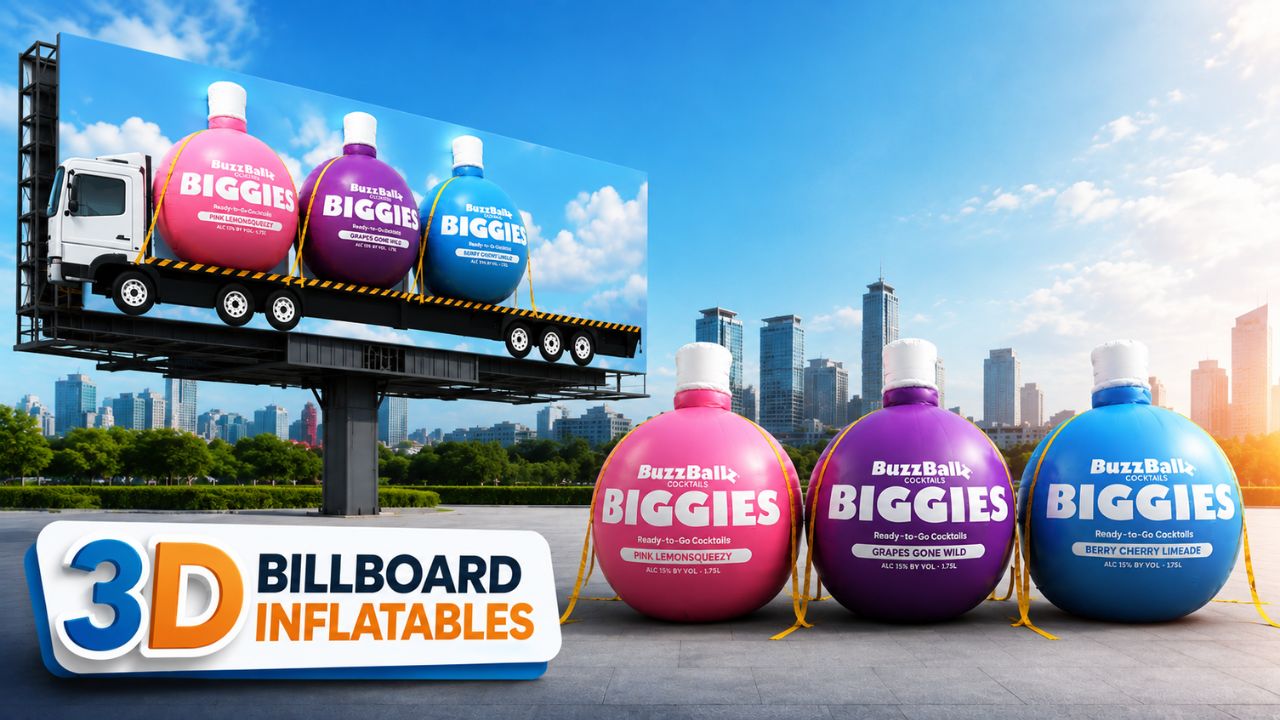
3D Billboard Inflatables – High-Impact Outdoor Advertising
3D billboard inflatables turn flat advertising space into giant three-dimensional brand experiences that stand out at a glance. Built as custom inflatable structures shaped like products, mascots, arches, or full billboard frames, they give businesses, agencies, event organizers, and brand managers a high-impact way to dominate attention.
This guide explains how 3D billboard inflatables are designed, engineered, manufactured, printed, inflated, anchored, shipped, installed, maintained, and purchased for commercial use. Written from the perspective of an experienced inflatable manufacturer like Xtrafun Inflatables, it covers practical decisions on customization, materials, safety, logistics, worldwide shipping, and long-term ROI. By the end, you will be able to brief, buy, and manage high-performing inflatables with confidence.
Traditional 2D signs often get lost among competing visuals, while three-dimensional inflatables become landmarks people notice, photograph, and share. The sections that follow explain how to turn that visual power into reliable, reusable assets for events, retail promotions, exhibitions, product launches, sporting events, festivals, and large-scale outdoor advertising campaigns.
“When a billboard turns into an object people want to photograph, you’ve moved from media space to real-world experience.”
— Senior Project Engineer, Xtrafun production team
Key Takeaways
-
3D billboard inflatables act as mobile landmarks that dominate attention across highways, stadiums, festivals, rooftops, and trade shows. They combine spectacle, physical presence, and photo-friendly design, which makes them far harder to ignore than flat media in the same locations.
-
The best inflatables start with a sharp brief that covers objectives, sites, wind exposure, power access, and brand rules. Smart choices on format, scale, materials, digital printing, and inflation systems help turn that brief into a safe, visually strong structure that works in real conditions.
-
Long-term value depends on safety planning, anchoring, maintenance, and reuse strategy rather than fabrication cost alone. When inflatables are designed for touring and stored correctly, they can deliver value across many events, seasons, and markets before needing full replacement.
-
Working with a single experienced inflatable manufacturer simplifies design, engineering, fabrication, global shipping, and after-sales support. A one-stop partner reduces miscommunication between agencies, media owners, and installers, and keeps accountability clear from first sketch to final deployment.
Table of Contents
- What Are 3D Billboard Inflatables And Where Do They Work Best?
- How 3D Billboard Inflatables Drive Attention, Recall, And ROI
- Design And Customization: Turning A Brief Into A High-Impact 3D Inflatable
- Materials, Digital Printing, And Construction Quality
- Inflation Systems, Anchoring, Safety, And Compliance
- Logistics, Worldwide Shipping, Installation, And Maintenance
- How To Choose The Right 3D Billboard Inflatable And Manufacturer
- Comparing 3D Billboard Inflatables To Other Outdoor And Event Branding Options
- In Summary
- Frequently Asked Questions
What Are 3D Billboard Inflatables And Where Do They Work Best?
3D billboard inflatables are custom inflatable structures that function as three-dimensional billboards across outdoor media, events, sports, retail, and exhibitions. These inflatables either extend from existing billboards or stand alone as branded frames, arches, tunnels, mascots, and product replicas. In practice, they turn ordinary locations into oversized product moments or theatrical brand scenes that people talk about. Because they scale from rooftop coffee cups to stadium tunnels, they suit both broad-reach campaigns and focused experiential activations.
In the broader out-of-home mix, 3D inflatable billboards sit between static roadside media and on-the-ground experience design. They can sit on top of classic steel monopole boards or appear as portable inflatable walls on a festival tour. For event planners, they double as both signage and architecture, shaping how crowds move through start lines, entry gates, and sponsor zones. For retailers and trade show teams, smaller formats become wayfinding tools and visual magnets above crowded aisles.
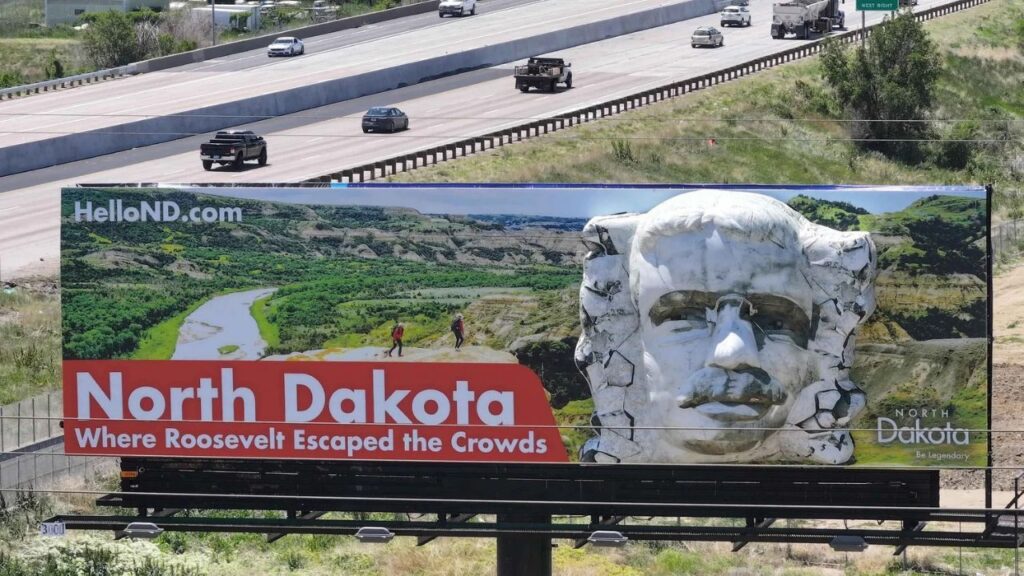
Key Formats Of 3D Billboard Inflatables
Key formats of 3D billboard inflatables fall into a few practical families that map closely to use case and deployment style. Understanding these groups helps teams choose the right structure before any creative work begins. While every project is custom, most commercial briefs land in one of the formats below.
-
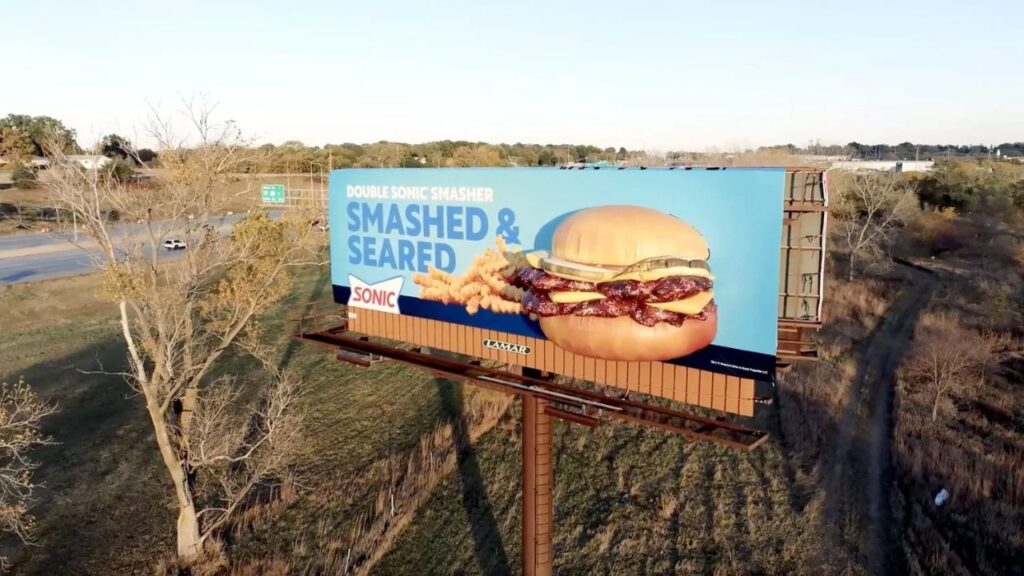
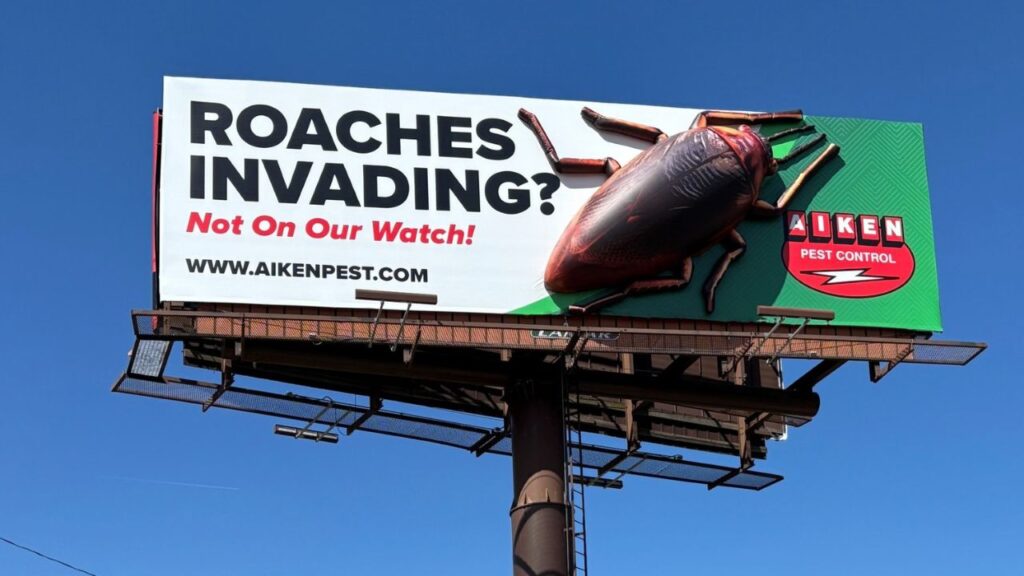
Hybrid 3D inflatable billboards combine a flat printed face with sculpted inflatable elements that break the frame. Classic examples might include a shark head bursting out of an aquarium board or a giant bottle pushing forward from a highway ad.
-
Fully inflatable billboard structures work as freestanding frames or walls, sometimes used like portable touring units that pop up in parking lots or plazas.
-
Event-scale 3D inflatables act like billboards without a board: arches, tunnels, domes, and mascot figures that carry branding visible from distance.
A quick reference view is helpful.
| Format | Best Use Case | Portability | Typical Environment |
|---|---|---|---|
| Hybrid board plus inflatable | Roadside OOH and wallscapes | Low, fixed to structure | Highways, urban boards |
| Freestanding inflatable frame | Tours, festivals, retail lots | High, deflates to bags | Plazas, parking lots |
| Arches and tunnels | Races, stadiums, entries | High, event kits | Finish lines, gates |
| Mascots and product replicas | Events, retail, exhibitions | Medium to high | Entrances, concourses |
To expand these formats into a larger activation system, many brands combine them with Advertising Inflatables, Inflatable Arches, Inflatable Product Replicas, and Advertising Balloons for sky-level visibility.
Typical Applications By Sector And Objective
Typical applications of 3D inflatable billboards vary by sector, but the pattern is consistent. Brands use them where they need fast recognition and strong photo value at the same time. Each buyer group can map these formats directly to their own objectives.
-
Consumer brands use roadside hybrids, rooftops, and flagship-store inflatables for:
-
Product launches and flavor drops
-
Seasonal pushes, like summer drinks or holiday promotions
-
Brand refresh campaigns and packaging changes
-
-
Events and festivals rely on arches, mascots, and tall inflatable billboards to:
-
Frame entries and exits
-
Flag sponsor zones and VIP areas
-
Create selfie-friendly “hero props” that show up in social feeds
-
-
Sports organizations deploy tunnels, sideline mascots, and race arches as three-dimensional billboards that:
-
Read clearly on broadcast cameras
-
Amplify sponsor presence at walkouts and finish lines
-
Provide consistent visual language from stadium to fan zones
-
-
Retailers use rooftop giants, parking-lot frames, and ceiling-hung miniatures to:
-
Pull traffic into stores from nearby roads
-
Spotlight priority categories or featured products
-
Support limited-time offers and grand openings
-
-
Trade show and B2B exhibition teams emphasize overhead logo inflatables, inflatable booth walls, and domes that:
-
Make stands easy to find in a crowded hall
-
Provide large branding surfaces without heavy structure
-
Create enclosed or semi-enclosed meeting spaces
-
How 3D Billboard Inflatables Drive Attention, Recall, And ROI
3D billboard inflatables drive attention, recall, and ROI by breaking visual habits, delivering emotional impact, and generating organic social coverage. Compared with flat billboards or vinyl banners, they introduce depth, scale, and sometimes movement that our brains treat more like real objects than graphics. This difference translates into more people looking, remembering, photographing, and sharing the scene, which feeds directly into measurable marketing outcomes.
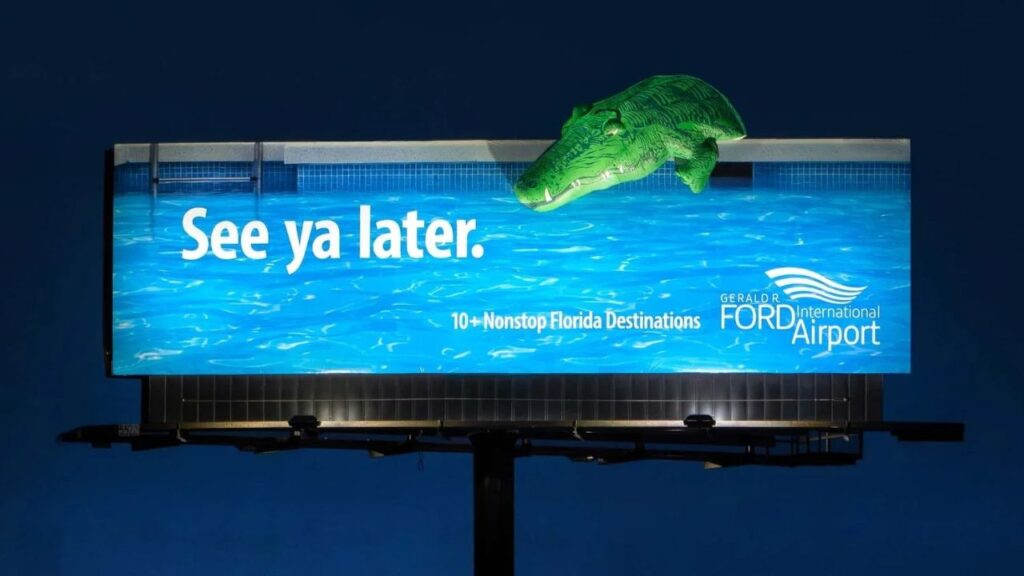
From a cognitive standpoint, roadside viewers expect rectangles with flat images and short copy, and research on the role of location and visual saliency in outdoor advertising has shown that unusual visual attributes significantly increase the likelihood a passerby will notice and remember a roadside display. When a shark nose, soda bottle, or inflatable character appears to burst through that rectangle, the anomaly interrupts automatic filtering. The same applies at events, where most assets are flat mesh banners and feather flags. A giant inflatable mascot or a towering energy drink can naturally dominates the field of view. That extra visual weight costs money, but it also concentrates impact.
Visual Impact, Storytelling, And Social Amplification
Visual impact from 3D billboard inflatables comes from breaking the frame and playing with scale in ways flat media cannot match. A shark extending several feet off a billboard, for instance, feels closer to an encounter than a picture, which is why those campaigns tend to be widely remembered. Similar logic applies to an injury-law concept where an inflatable worker appears to slip from the top edge of the sign, turning a simple message into a mini-story people repeat.
Emotional levers matter as much as raw size:
-
Humor and surprise: Pharmaceutical campaigns or snack brands sometimes use playful visuals around delicate or everyday topics. That quiet laughter and “you have to see this” reaction fuels word of mouth.
-
Spectacle and drama: Sports inflatables, such as player tunnels shaped like helmets, layer spectacle and anticipation into the walkout moment, strengthening team and sponsor associations.
-
Photo backdrops: At close range, these inflatables double as photo backdrops, making it natural for attendees to take selfies or group shots and post them to Instagram, TikTok, or Snapchat.
That social sharing turns physical inflatables into assets that live far beyond the site, echoing findings on how advertising matters in outdoor media strategies that show creative, attention-grabbing outdoor formats drive substantially higher audience engagement than conventional placements. An inflatable at a half-marathon finish, for instance, might reach tens of thousands in person but appear in hundreds of photos that circulate through social platforms and fitness apps. When marketers pre-plan hashtags, QR codes, or simple prompts on inflatable surfaces, they convert organic attention into trackable engagement data.
“We always design with the camera in mind. If people look good standing in front of it, they will do the marketing for you.”
— Creative Director, Xtrafun custom projects
ROI, Reuse, And Strategic Role In The Marketing Mix
ROI for 3D inflatable billboards rests on both immediate impact and multi-use planning. Budgets cover design and engineering, digital printing, fabrication, shipping, installation, permits, storage, and maintenance, so decision makers need a structured view of return. Compared with standard vinyl billboards, 3D elements usually cost more per unit, but they can justify that gap through:
-
Higher attention and stopping power
-
Stronger recall in post-campaign surveys
-
Social amplification and earned reach
-
Multi-year reuse across events and locations
A smart reuse plan often begins at the design stage:
-
Neutral base branding on arches and mascots, with campaign-specific banners attached via Velcro or zippers.
-
Modular components where the same product replica anchors a roadside billboard one month and a festival entrance the next.
-
Touring kits packed into labeled bags or crates with instructions for regional teams.
Strategically, 3D billboard inflatables can act as:
-
The hero asset of a campaign
-
A dramatic amplifier layered onto a national OOH buy
-
An engagement magnet at events and retail promotions
-
A framing device for start lines, fan zones, or pop-up exhibits
A simple ROI framework looks at:
-
On-site reach and dwell time
-
Photographed impressions and social metrics
-
Brand lift studies where available
-
Incremental traffic, leads, or sales during the activation window
Design And Customization: Turning A Brief Into A High-Impact 3D Inflatable
Design and customization for 3D billboard inflatables turn a marketing brief into a safe, buildable structure that looks as strong on-site as it did in a pitch deck. The early stages determine whether the inflatable delivers on objectives, aligns with brand identity, and survives real-world wind and handling. From a manufacturer’s perspective, clear inputs and disciplined modeling avoid surprises later for agencies, media owners, and operations teams.
The process usually begins with a call or worksheet from a brand, agency, or event organizer. That document should outline the role of the inflatable within the overall campaign, whether it anchors a billboard, frames a marathon finish, or draws retail footfall. Next comes systematic review of locations and constraints, from billboard dimensions and stadium clearances to power availability at a county fairground. Only after those facts are known does it make sense to sketch poses, pick a hero 3D element, and consider supporting inflatables like arches or POS miniatures.
From Marketing Brief To 3D Concept
Turning a marketing brief into a 3D concept starts with objectives and conditions, not artwork. For 3D billboard inflatables, the first questions cover awareness, engagement, and action targets, as well as how success will be measured.
Key inputs you should prepare before contacting a manufacturer:
-
Campaign objectives: awareness, footfall, data capture, sponsorship value, or a mix.
-
Primary locations: roadside monopole, stadium, festival gate, store rooftop, mall atrium, or convention floor.
-
Campaign duration: single weekend, multi-week roadside flight, or recurring annual event.
-
Reuse expectations: one-off stunt or asset expected to tour across several markets.
Site and structural details then shape what is realistically possible:
-
Billboard dimensions and available clearances.
-
Viewing angles and approach speeds (for example, highway vs. city center).
-
Prevailing wind directions and typical wind speeds.
-
Power availability and distance to reliable power points.
-
Local sign codes and transport regulations affecting overhangs or moving elements.
With that information in hand, creative teams can select one dominant 3D element and strip copy down to the essentials, matching tone to the brand’s personality whether playful, premium, or technical. Manufacturers typically provide:
-
3D renders showing the inflatable from several angles.
-
Photo composites over actual site photos so stakeholders can judge silhouette and legibility.
-
Notes on structural implications of different poses or proportions.
Customization Options, Brand Consistency, And Multi-Asset Ecosystems
Customization choices for 3D billboard inflatables extend far beyond simply scaling up a logo. Brands can commission:
-
Exact product replicas that match packaging proportions and details.
-
Stylized mascot figures that keep correct brand character features.
-
Dynamic scene elements like splashes, flames, or pouring liquids.
-
Sculpted logo shapes or typography that track existing visual identity.
Maintaining brand consistency means:
-
Using approved fonts and accurate Pantone-matched colors.
-
Keeping packaging details, character expressions, and proportions faithful to guidelines.
-
Matching finishes (matte vs. gloss) to how the brand appears on shelves and in print.
For campaigns that span multiple channels, a family of inflatables built on one visual idea often works best. A hybrid billboard might feature a massive product head, while a matching Inflatable Arch welcomes guests to an experiential pop-up, and miniature Inflatable Product Replicas hang above key aisles in-store.
Interchangeable banners or clip-on panels let teams swap:
-
Promotional messages
-
Partner or sponsor logos
-
Local language variants
A specialist like Xtrafun Inflatables supports this ecosystem approach with custom brand inflatables, product replicas, logo characters, arches, tunnels, inflatable tents, and airtight POS miniatures. Buyers can later extend the same platform using related categories such as Advertising Inflatables, Inflatable Product Replicas, Inflatable Arches, or Advertising Balloons for higher-level visibility at larger venues.
Materials, Digital Printing, And Construction Quality
Materials, digital printing, and construction quality determine how 3D billboard inflatables look on day one and how they perform after many inflations, shipments, and weather cycles. The right fabric and coating choices protect brand colors, while thoughtful panel layout and seam placement keep logos, faces, and product details from warping. Cutting corners here can turn a brilliant creative idea into a sagging, faded object that reflects poorly on the sponsor.
Commercial inflatables for OOH and events usually rely on technical textiles such as PVC-coated polyester or treated nylon rather than generic plastics, a structural approach supported by theoretical and experimental analyses of beam-like inflatable structures examining how fabric properties affect load-bearing performance. These fabrics balance strength, flexibility, and print quality in ways cheaper tarps cannot match. At the same time, different deployment patterns support different constructions; a rooftop giant that stays up for weeks needs more UV and abrasion resistance than a one-day trade show arch.
Fabric Choices, Durability, And Weather Resistance
Fabric selection for 3D billboard inflatables is tightly linked to environment and lifespan expectations.
-
Heavy-duty PVC or vinyl-coated polyester suits large outdoor displays that face wind, direct sun, and repeated handling. These textiles offer:
-
High tear strength
-
Weldable seams for airtight or continuous-air skins
-
Resistance to abrasion from rigging and transport
-
-
Lighter nylon or polyester fabrics work well for:
-
Indoor activations and suspended inflatables
-
Short-term events
-
Situations where weight and setup time must be minimized
-
Weather resistance goes beyond basic waterproofing. UV exposure on a rooftop in hot climates can fade colors and weaken fibers if coatings are not optimized. Serious manufacturers specify:
-
UV-stabilized inks and laminates
-
Silicone-coated nylon fabrics that resist abrasion and color fade
-
Reinforced corner patches and internal webbing at anchor points
Double-skin constructions and internal baffles can create:
-
Smoother, less “balloon-like” surfaces
-
More sculpted detail on faces, logos, and products
-
Better control of expansion in high-temperature environments
A producer such as Xtrafun Inflatables leans on these material combinations to deliver inflatables that handle rooftops, beaches, airport terminals, and supermarket forecourts without rapid degradation.
Digital Printing, Color Fidelity, And Structural Detailing
Digital printing for 3D billboard inflatables needs to balance visual richness with structural realities. Two main approaches are common:
-
Direct-to-skin printing: artwork is printed straight onto the inflatable body. This works best when one campaign or brand will use the asset for its entire life.
-
Replaceable panels or skins: vinyl banner faces or printed panels attach to the base inflatable with zippers or Velcro. This approach is ideal when:
-
Sponsors change across events
-
Messaging rotates by season or region
-
One physical structure supports several brands over time
-
In both approaches, UV-resistant inks and a thoughtful choice between matte and gloss surfaces influence readability and photography. Matte skins usually avoid harsh reflections under stadium lighting or midday sun.
Artwork techniques that improve appearance:
-
Added highlights and shadows to deepen the 3D illusion.
-
Subtle perspective tricks to maintain realism from typical viewing angles.
-
Careful alignment of key design elements away from complex seam junctions.
From an engineering standpoint, panel layout and seam placement must respect that artwork, so:
-
Logos do not cross awkward joins.
-
Human faces stay natural instead of distorted.
-
Fine typography remains crisp at scale.
Factories like the one run by Xtrafun Inflatables test-inflate pieces before shipment to check:
-
Color alignment and density
-
Logo fidelity from actual viewing distances
-
Structural balance and correct internal air distribution
Any issues discovered at this stage can be corrected with adjusted baffles, altered seam positions, or fine-tuning of print files before the inflatable reaches a client’s site.
Inflation Systems, Anchoring, Safety, And Compliance
Inflation systems, anchoring strategies, safety planning, and regulatory compliance underpin every professional deployment of 3D billboard inflatables. The most creative design still fails if blowers are undersized, anchors are weak, or wind ratings are ignored. For brands operating across markets with strict regulations, risk management is just as important as spectacle.
At a high level, buyers choose between:
-
Sealed inflatables that hold air after one fill.
-
Continuous-air inflatables that rely on running fans.
Larger billboard extensions, arches, and tunnels almost always use continuous systems for stability and control. Anchoring then keeps that volume of fabric where it belongs, whether tied to steel billboard frames, concrete ballast, or ground stakes at a festival site. Overlaying all of this, local codes introduce rules on temporary signage, fire safety, and traffic sightlines that must be respected.
Inflation Systems And Power Planning
Inflation choices for 3D billboard inflatables typically fall into two families, each with practical tradeoffs.
Continuous-air inflatables:
-
Use one or more electric blowers to push air into the structure as long as it operates.
-
Suit complex, large forms such as:
-
Highway billboard toppers
-
Giant rooftop mascots
-
Sports tunnels at arenas or race start lines
-
Advantages:
-
Crisp shapes even under wind load
-
Easy fine-tuning of internal pressure via blower settings
-
Rapid deflation in bad weather by simply powering down and opening zips
Points to manage:
-
Dependence on reliable power
-
Blower placement to manage noise and avoid interfering with audience or broadcast audio
-
Cord routing and protection to prevent trip hazards
Sealed-air inflatables:
-
Filled once using a pump, then capped.
-
Hold air for hours or days depending on construction and temperature swings.
-
Shine in small to mid-size applications like:
-
Indoor product replicas
-
Hanging logos in atriums
-
POS inflatables and sampling counters
-
A manufacturer such as Xtrafun Inflatables often specifies low-power cold-air systems, which:
-
Draw modest current from standard 110–240V circuits
-
Are compatible with compact generators where grid power is absent
-
Reduce the risk of overheating and noise on long runs
Power planning should always include:
-
Circuit load calculations, especially in older venues.
-
Logical cord routing and cable management for safety.
-
Backup plans for high-stakes or long-running campaigns.
Pro tip from field crews: “Mark your blower circuits clearly and avoid plugging other gear into them at events. A DJ plugging into your line right before a show is how inflatables collapse on camera.”
Anchoring, Wind Management, And Regulatory Compliance
Anchoring and wind management transform inflatables from artistic objects into safe, predictable assets.
Ground-based applications usually rely on:
-
Tethers attached to water barrels or concrete blocks.
-
Driven stakes sized for local soil conditions.
-
Redundant tie-down points so no single failure leads to loss of control.
Billboard-mounted inflatables require:
-
Engineered attachments to the supporting steel or frame.
-
Review by a structural engineer when load or overhang is significant.
-
Load-spreading plates and internal webbing that avoid point stress.
Key wind management practices:
-
Agreeing on maximum operating wind speeds in writing before deployment.
-
Using on-site anemometers or trusted local forecasts during the event.
-
Implementing staged deflation plans as wind approaches thresholds.
For roadside media, compliance extends beyond physics. Municipal sign codes, fire departments, and transportation authorities may restrict:
-
Projection distance from billboard faces.
-
Placement near intersections, pedestrian crossings, or power lines.
-
Elements that resemble official traffic devices.
Indoor venues such as convention centers often demand:
-
Flame-retardant materials that meet local standards.
-
Clearance diagrams showing exits and egress routes.
-
Certified power distribution and cable protection.
Clients, venues, and manufacturers share responsibility here. Experienced partners such as Xtrafun Inflatables supply documentation on:
-
Materials and fire ratings
-
Wind ratings and operating guidelines
-
Recommended anchoring options for typical surfaces
Agencies and event organizers then use that documentation to secure permits and align with venue safety teams well before show day.
Logistics, Worldwide Shipping, Installation, And Maintenance
Logistics, worldwide shipping, installation workflows, and maintenance routines make the difference between a smooth rollout and a frantic scramble on site. 3D billboard inflatables may be large in use, yet they travel as folded fabric with blowers, hardware, and instructions. Getting them from a factory to a freeway, a race course, or a trade show on time requires planning around customs, transit times, site access, and crew availability.
From a manufacturer’s side, projects are usually packed into labeled bags or crates with clear part numbers, photographs, and assembly notes. International shipments head out via air freight for rush timelines or ocean freight when budgets and lead times permit. Once on location, coordinated installation windows with billboard owners, stadium operations, or festival sites avoid conflicts with traffic, rehearsals, or other contractors. After use, inflatables transition into a slower rhythm of cleaning, inspection, possible repair, and storage until the next activation.
Shipping, Installation Workflow, And Global Deployments
Shipping 3D billboard inflatables is far more efficient than their on-site size suggests.
-
A 30-foot product replica may pack into a single pallet-sized crate.
-
A full race arch with blowers and tethers might fit into two or three rugged bags.
-
Weights typically range from roughly 40 kilograms for smaller pieces to several hundred kilograms for very large builds.
Logistics partners such as DHL, FedEx, or Maersk routinely handle this type of freight. Documentation must cover:
-
Commercial invoices and HS codes.
-
Certificates related to flame retardancy or specific materials.
-
Packaging lists that match crate labels.
Producers with export experience, such as Xtrafun Inflatables, guide clients on realistic lead times, factoring in:
-
Design iterations and approvals.
-
3D modeling, patterning, and print production.
-
Fabrication queue and quality checks.
-
Transit buffers for customs and potential delays.
On arrival, a site survey confirms:
-
Clearances above and around the inflatable.
-
Power points and cable routing.
-
Anchor spots on ground, rooftop, or billboard structure.
A standard installation sequence includes:
-
Unpacking and layout of the inflatable and hardware.
-
Attaching anchoring hardware to designated points.
-
Connecting blowers and running preliminary electrical checks.
-
Initial inflation and visual inspection for twists or tangles.
-
Tension adjustments on tethers and ballast.
-
Final safety checks with venue or site managers.
For touring assets, manufacturers often provide:
-
Packing diagrams printed and laminated.
-
Color-coded labels on tethers, straps, and blower ports.
-
Simple manuals or QR code links to video walk-throughs.
This structure lets local crews in different cities repeat the same inflation and teardown steps reliably without constant supervision.
Maintenance, Repair, And Storage Checklists
Maintenance for 3D billboard inflatables protects both brand image and asset life. After each deployment, crews should handle cleaning, inspection, and storage prep as carefully as installation. Dirt, pollution, and beverages can stain surfaces, while hurried packing can stress seams and zippers.
A simple maintenance checklist helps.
| Task | Frequency | Responsible Party |
|---|---|---|
| Surface cleaning with approved mild detergent and soft brushes | After every deployment | On-site crew or vendor |
| Visual inspection of seams, anchor points, zippers, and valves | After cleaning and before packing | Crew supervisor |
| Blower and power cord function check under load | Before each use | Technical staff |
| Documentation of any damage with photos and notes | As issues appear | Operations manager |
| Scheduling of factory-level repairs for significant tears or hardware issues | As needed | Brand or agency lead |
Storage and handling practices matter just as much.
| Best Practice | Risk To Avoid |
|---|---|
| Dry inflatables completely before folding and packing | Mold growth and material breakdown |
| Fold and roll along natural panel lines instead of random creasing | Stress concentrations at seams |
| Use labeled bags or crates with basic contents lists | Lost parts and delayed installations |
| Store in cool, dry, rodent-free spaces away from direct sunlight | Premature fabric aging and damage |
| Train staff on unpacking and packing procedures with photos or videos | Improvised methods that shorten asset life |
Field-repair kits can address small punctures or abrasions using compatible patch materials and adhesives. Larger damage should return to the factory for professional repair, especially when:
-
Tears reach into seams or anchor patches.
-
Zippers, valves, or blower collars are compromised.
-
Structural webbing or internal baffles are affected.
Providers such as Xtrafun Inflatables often offer repair services for their own builds, extending lifespans across many campaigns when clients follow consistent cleaning and storage routines.
How To Choose The Right 3D Billboard Inflatable And Manufacturer
Choosing the right 3D billboard inflatable and manufacturer starts with clarifying the role of the inflatable, then matching format, scale, materials, and vendor capabilities to that role. A structured process saves time across marketing, procurement, legal, and operations teams, and reduces the chance of late surprises around permits or performance. Rather than treating inflatables as novelty items, mid-to-large organizations should treat them as engineered assets with multi-year value.
The decision path usually runs from strategic questions to technical specifics and vendor evaluation:
-
Define objectives, key messages, and environments.
-
Decide whether you need hybrid billboard extensions, freestanding frames, arches, tunnels, mascots, or product replicas.
-
Specify size, viewing distances, wind exposure, power, and reuse plans.
-
Use that specification to compare manufacturers based on experience, safety culture, and support.
Buyer’s Checklist: From Brief To Purchase Order
A buyer’s checklist for 3D billboard inflatables gives teams a shared framework for internal discussions and vendor conversations. It turns vague wants into concrete decisions, which speeds quoting and engineering.
Key strategic issues:
-
Primary goals: awareness, footfall, sponsorship value, or lead generation.
-
Intended asset lifespan: single campaign vs. multi-year.
-
Reuse scenarios: touring kit, recurring event, or permanent rooftop feature.
Technical questions:
-
Target dimensions and main viewing distances.
-
Typical wind and weather exposure.
-
Available power and any noise limits.
-
Installation constraints such as:
-
Rooftop access and crane limits
-
Stadium rigging rules
-
Billboard structure capacities
-
Specification items:
-
Preferred fabric type and finish.
-
Inflation method (continuous vs. sealed).
-
Artwork style (photographic, illustrated, or minimal).
-
Anchoring approach and ballast options.
-
Required safety documentation and country standards.
A compact checklist table helps capture these points.
| Decision Area | Key Questions | Recommended Choice For Most Campaigns | Notes |
|---|---|---|---|
| Objective and role | Is the inflatable a hero visual, amplifier, or wayfinding element? | Hero visual at one or two flagship sites, amplifier elsewhere | Align with broader OOH and experiential plan |
| Format | Hybrid board add-on, freestanding frame, arch, tunnel, mascot, or product replica? | Product replica or arch plus matching POS inflatables | Consider future reuse across venues |
| Scale and viewing | How far away and how fast are viewers moving? | Size so shape reads clearly within 3 seconds | Use site photos for mockups |
| Fabric and lifespan | Short stunt or multi-year asset? | PVC-coated polyester outdoors, lighter nylon indoors | Ask for UV-resistant inks and coatings |
| Inflation and power | Is continuous power available and acceptable? | Continuous-air for large shapes, sealed for small indoor uses | Plan circuits and generator capacity early |
| Anchoring and safety | What ground or structural anchors exist? | Mixed tether and ballast systems with clear wind limits | Request written wind and safety guidelines |
When needs tilt toward sky-visible formats, your internal teams can also review Advertising Balloons, rooftop inflatables, and helium blimps. For walk-through features and covered brand spaces, Inflatable Tents, dome structures, and Inflatable Arches offer complementary options that follow similar planning steps.
Evaluating Inflatable Manufacturers And Why Xtrafun Inflatables Stands Out
Evaluating inflatable manufacturers means looking past glossy photos to their track record with complex advertising builds. Buyers should ask for portfolios that include:
-
Giant inflatables and product replicas.
-
Arches, tunnels, and walk-through structures.
-
Logo shapes, character costumes, and mascots.
-
POS and POP miniatures that mirror large-scale builds.
Material standards, documented wind ratings, and safety processes are equally important; vendors should specify fabrics, coatings, inflation systems, and anchoring hardware in writing. After-sales support such as repair services, spare blowers, and maintenance guidance signals a long-term mindset.
One-stop capability simplifies life for agencies and brand teams. When a single partner handles:
-
Concepting and 3D modeling
-
Engineering drawings and patterning
-
Digital printing and fabrication
-
Testing, packing, and documentation
…miscommunication drops and accountability stays clear.
Xtrafun Inflatables exemplifies this model as a premier provider of custom inflatable advertising displays based in Hyderabad, with more than two decades of manufacturing practice and exports to many regions worldwide. Its range spans:
-
Giant outdoor advertising inflatables
-
Detailed product replicas for FMCG, beverage, and pharma brands
-
Arches, tunnels, and start-finish structures for races and sports
-
Costumes, logo characters, and brand mascots
-
Tents, domes, Advertising Balloons, and blimps
-
Airtight POS inflatables for retail and exhibitions
Production is centered on weather-resistant, silicone-coated fabrics and low-maintenance cold-air systems, guided by structured quality processes that include test inflations and visual checks before shipment. Agencies and brands can treat it as an extension of their production team, sharing briefs, iterating prototypes, and then scaling rollouts across markets with consistent standards.
“We design every advertising inflatable as if it will be unpacked by a new crew in a new city who has never seen it before. That mindset drives clarity in hardware, instructions, and labeling.”
— Operations Lead, Xtrafun export division
Comparing 3D Billboard Inflatables To Other Outdoor And Event Branding Options
Comparing 3D billboard inflatables to other outdoor and event branding options helps teams justify channel choices and defend budgets. Each medium has strengths and limits; 3D inflatables excel at spectacle, experience, and reuse, while traditional billboards, stage sets, and digital-only campaigns bring other advantages. The strongest plans blend formats, using inflatables as standout moments inside a coordinated mix.
From a deployment perspective, inflatable billboards and structures set up faster and travel more easily than most built sets. They require careful planning around power and wind, yet they often avoid the complexity of carpentry, steel, or heavy scenic construction. Cost per impression can compare favorably with premium static OOH or custom event builds, particularly when inflatables are reused across tours or annual events like marathons and fairs.
Comparative Pros And Cons Versus Other Media
A side-by-side view clarifies tradeoffs across main options.
| Medium | Attention Level | Cost Per Impression | Lead Time | Reuse Potential | Experiential Value |
|---|---|---|---|---|---|
| 3D billboard inflatables | Very high due to 3D form and scale | Moderate to low over multiple uses | Moderate for custom builds | High with good storage | High, supports interaction and photos |
| Standard vinyl billboards | Moderate in cluttered corridors | Low, especially in long runs | Short for reprints | Limited without 3D elements | Low, mainly visual |
| Stage or set construction | High, especially on stages | High, often one-off | Long, with engineering and permits | Limited, venue specific | High, but less portable |
| Digital-only campaigns | Variable, depends on targeting | Variable, often efficient | Short once creative exists | N/A, content lives online | Low physical impact |
Advantages of 3D billboard inflatables:
-
Standout presence and three-dimensional engagement.
-
Portability and compatibility with touring or multi-city campaigns.
-
Strong photo appeal and organic social reach.
-
Multi-year reuse with proper maintenance.
Limitations:
-
Reliance on power for many continuous-air systems.
-
Sensitivity to wind thresholds and site-specific codes.
-
Need for storage space and handling processes between campaigns.
Traditional billboards or simple banners still shine when:
-
Lead times are very tight.
-
Budgets are minimal.
-
Sign codes leave no room for 3D objects extending beyond the frame.
Integrating 3D Inflatables Into Multi-Channel Campaigns
Integrating 3D billboard inflatables into multi-channel campaigns turns them from isolated stunts into central creative threads. A straightforward approach is to treat the inflatable visual as the hero image across:
-
Television and CTV spots
-
Social media and short-form video
-
Digital out-of-home networks
-
Retail displays and shelf talkers
For example, a launch campaign might feature:
-
A giant product replica on a hybrid roadside billboard.
-
Matching 3D renders in DOOH placements.
-
Behind-the-scenes videos of the inflatable installation shared on social.
-
Smaller Advertising Inflatables and Inflatable Marketing Displays inside key retailers.
Some brands pair:
-
Anamorphic digital boards that show exaggerated 3D motion, with
-
A real inflatable version at street level guiding visitors to a pop-up or sampling area.
Printing QR codes, hashtags, or short URLs on inflatables offers a bridge to:
-
Digital engagement and contest entries
-
Sampling feedback forms or surveys
-
Loyalty sign-ups or discount voucher downloads
As teams build out full activation systems, they often combine:
-
Advertising Inflatables (hero objects and brand icons)
-
Advertising Balloons and blimps (high-altitude visibility)
-
Inflatable Arches and tunnels (entries, routes, and start-finish lines)
-
Inflatable Product Replicas (on-ground spectacle and in-store impact)
This ecosystem approach connects sky, street, and store with a consistent 3D visual language.
3D billboard inflatables give brands, agencies, event organizers, and sports properties a flexible way to turn ordinary spaces into memorable three-dimensional brand stages. From roadside hybrids and rooftop coffee cups to race arches, stadium tunnels, and trade show domes, they function as mobile landmarks that viewers find hard to ignore. When designed for reuse, they support campaigns across outdoor media, events, retail promotions, exhibitions, and festivals without needing constant reinvention.
Achieving that level of performance requires more than a fun sketch. Teams need clear briefs, informed format choices, solid materials, accurate digital printing, and tested inflation and anchoring systems that respect wind ratings and local codes. Logistics planning, cleaning, inspection, and careful storage extend lifespans and protect budgets over many deployments.
Choosing an experienced one-stop manufacturer such as Xtrafun Inflatables gives marketers access to practical engineering, weather-resistant fabrics, global shipping experience, and repair support under one roof. A good next step is to refine your internal brief using the buyer’s checklist above, explore related categories like Advertising Inflatables, Inflatable Product Replicas, Inflatable Arches, and Advertising Balloons, then collaborate with a specialist partner to turn your next big idea into a reliable, larger-than-life inflatable presence.
Frequently Asked Questions
Question: How long do 3D billboard inflatables typically last in commercial use?
Well-built 3D billboard inflatables often last several years when used and maintained correctly. Lifespan depends on UV exposure, frequency of deployment, handling care, and how well they are anchored in wind. Regular cleaning, post-event inspections, and timely repairs help prevent small issues from becoming structural failures, keeping assets in service across many campaigns.
Question: What lead time should we plan for custom 3D inflatable billboard projects?
Most custom 3D billboard inflatables require several weeks from brief to delivery, sometimes longer for complex builds. Design approvals, 3D modeling, engineering, printing, and fabrication all take time, and global shipping can add one to three weeks. Permits, venue sign-offs, and event calendars also influence timing, so planning windows of eight to twelve weeks are strongly recommended.
Question: What information does Xtrafun Inflatables need to quote and design a custom inflatable?
Manufacturers usually need objectives, approximate size, environment, timing, and expected campaign duration before quoting accurately. Helpful site details include photos, exact dimensions, likely wind exposure, and available power. Artwork inputs typically cover vector logo files, product reference images, brand color specifications, and any mandatory legal or promotional messaging that must appear on the inflatable surfaces.
Question: Can one inflatable be reused across different campaigns or venues?
Yes, many 3D billboard inflatables are designed specifically for reuse across campaigns and locations. Product replicas, logos, arches, and mascots often carry timeless branding, while clip-on banners or interchangeable panels handle campaign-specific messaging. Touring kits, clear packing instructions, and simple installation manuals let local crews redeploy the same asset in new cities with consistent results.
Question: How do 3D inflatable billboards perform in bad weather or high wind?
3D billboard inflatables are engineered with specific wind ratings and operating limits that must be respected. In moderate wind they perform well when anchored properly, but above defined thresholds they should be deflated and secured. Weather monitoring, solid ballast or structural anchors, reinforced attachment points, and clear deflation plans all help manage storms and protect people and property.
Question: What budgets should we expect for commercial 3D inflatable advertising displays?
Budgets vary widely based on size, complexity, material choice, print coverage, shipping distance, and installation needs. A simple arch or small product replica costs far less than a massive billboard extension with intricate sculpting. Compared with stage builds or premium static OOH, inflatables can deliver strong value when planned for multi-year reuse, smart placement, and integration with digital campaigns.
Question: Does Xtrafun Inflatables support international clients, including brands and agencies in the U.S.?
Yes, many specialist inflatable manufacturers regularly export to international clients and work comfortably with U.S. brands and agencies. Typical collaboration flows include remote briefs, digital design reviews, production approvals, then air or sea freight with full customs documentation. Versatile product ranges cover events, sports, retail, exhibitions, and outdoor advertising, so teams can standardize inflatable assets across multiple regions.
