
The Strategic Role of Bouncy Castles in Modern Experiential Marketing
In today’s competitive market, brands are constantly seeking innovative ways to cut through the noise and forge meaningful connections with consumers. Traditional advertising methods are often overlooked, leading to a surge in the adoption of experiential marketing—a strategy that focuses on creating immersive and memorable brand interactions. Within this landscape, custom-branded bouncy castles have emerged as a surprisingly powerful and versatile tool. Far from being just children’s playthings, these inflatables serve as dynamic, high-impact platforms for brand engagement, transforming passive audiences into active participants.
The primary advantage of a bouncy castle in a marketing context is its innate ability to command attention. Their large scale, vibrant colors, and association with fun create an immediate visual anchor at any event, from a corporate family day to a sprawling public festival. This visual magnetism naturally draws crowds, increasing foot traffic to a specific booth or activation area. Once engaged, consumers are immersed in a positive, high-energy environment directly associated with the brand, fostering strong emotional connections and positive sentiment.
Furthermore, branded inflatables are powerful engines for generating organic social media content. The unique and enjoyable experience of a bouncy castle encourages attendees to take photos and videos, which they then share across their social networks. A strategically placed logo, a unique inflatable shape that reflects a brand’s mascot, or a hashtag printed on the side can lead to exponential reach and user-generated content that serves as an authentic endorsement. This digital amplification extends the impact of a physical event far beyond its immediate attendees, providing measurable engagement metrics and enhancing online brand visibility.
A Comprehensive Guide to Commercial-Grade Bouncy Castle Types
Selecting the right type of inflatable is crucial for aligning with specific event goals, target demographics, and spatial constraints. Commercial-grade bouncy castles are engineered for durability and safety, and they come in various forms, each designed for a particular kind of engagement.
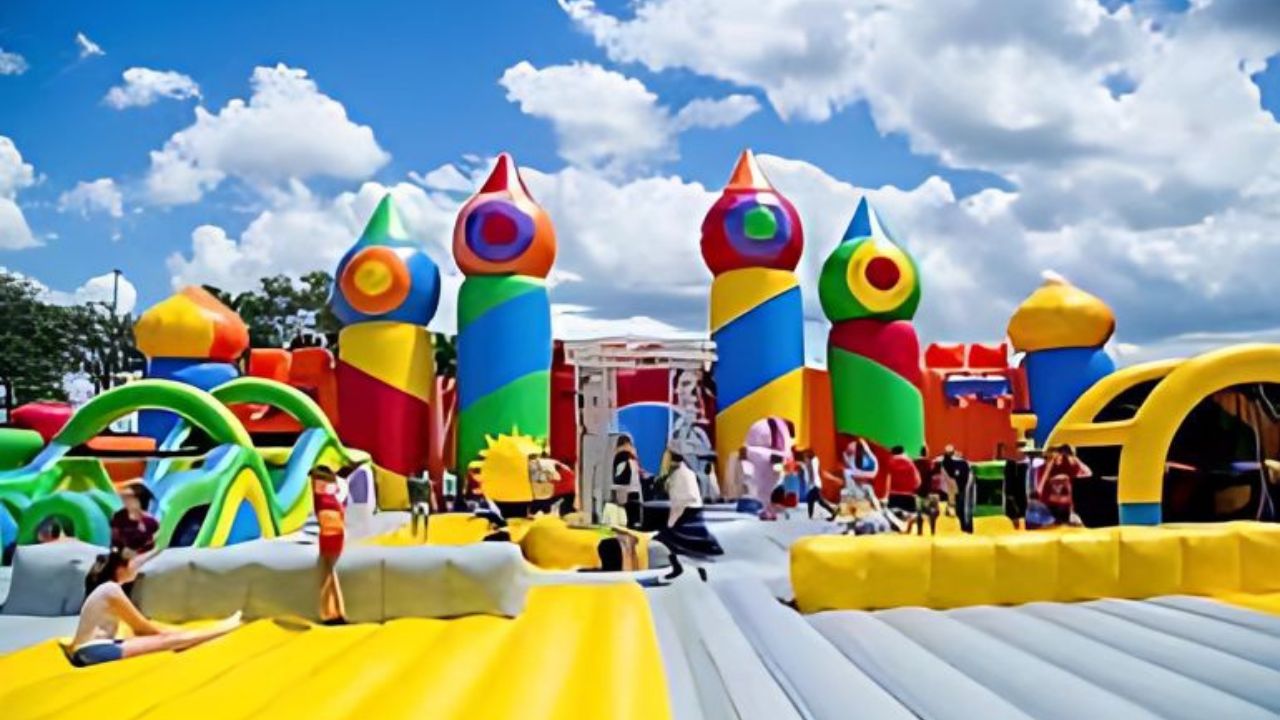
- Classic A-Frame and Castle Bouncers: This is the archetypal bouncy castle, often featuring castle turrets, pillars, and a large, open bouncing area. Its simple yet effective design makes it a versatile choice for a wide range of events, including community fairs, birthday parties, and corporate family days. They provide a safe and enclosed space for younger children and are easily brandable with custom colors and logos.
- Bounce and Slide Combos: These inflatables elevate the experience by integrating one or more slides with the main bouncing area. The dual-activity nature of combo units caters to a broader age range and keeps participants engaged for longer periods. They can feature internal or external slides, and some larger models include additional elements like climbing walls and small obstacles, making them a self-contained entertainment zone.
- Inflatable Obstacle Courses: Designed to foster friendly competition and physical activity, inflatable obstacle courses are a major attraction for older children, teenagers, and even adults. These units are modular and can range from 30 feet to over 100 feet in length, featuring a series of challenges such as tunnels, squeeze-throughs, climbing walls, and slides. They are ideal for team-building events, school carnivals, and brand activations centered around themes of energy and achievement.
- Inflatable Slides (Wet/Dry): Giant inflatable slides are high-impact attractions that can be used with or without water. Dry slides are popular year-round at large festivals and fairs, while wet slides become centerpieces for summer promotions, water park events, and resort entertainment. Their sheer height and thrilling nature make them highly visible and draw significant crowds.
- Interactive Inflatable Games: This category moves beyond simple bouncing and sliding to include skill-based and competitive games. Examples include inflatable basketball hoops, soccer penalty shootout games, gladiator jousting arenas, and bungee run tracks. These interactives are excellent for engaging teenagers and adults, making them perfect for fan zones at sporting events, trade show booths, and promotional tours where brands want to create a hands-on experience.
- Themed and Character Inflatables: Leveraging the power of popular culture or a brand’s own intellectual property, themed inflatables can be designed to resemble anything from a pirate ship or a jungle to a licensed cartoon character or a corporate mascot. These bespoke designs offer a unique and highly memorable experience that reinforces brand identity and storytelling.
Unleashing Brand Potential: Customization and Branding Options
The true marketing power of a commercial bouncy castle lies in its potential for complete customization. A standard, unbranded inflatable is an attraction; a fully customized inflatable is a three-dimensional, interactive advertisement that creates lasting brand recall. Leading manufacturers offer a suite of branding options to transform a simple bouncer into a powerful promotional asset.
- Custom Colors and Logos: The most fundamental level of branding involves producing the inflatable in a company’s specific brand colors (matching Pantone shades) and strategically placing high-resolution printed logos on prominent surfaces. This ensures immediate brand recognition from any angle.
- Removable Banners and Art Panels: For maximum versatility, especially for event companies or brands with multiple sponsors, inflatables can be designed with Velcro or D-ring systems to accommodate interchangeable banners. This allows a single inflatable unit to be used for different campaigns, events, or sponsors, offering a higher return on investment. The art panels can be digitally printed with specific event messaging, sponsor logos, or promotional offers.
- Bespoke Shapes and 3D Designs: The ultimate form of customization is creating a completely unique inflatable from the ground up. This can involve designing an inflatable that mimics a product’s packaging, a company mascot, or an iconic building associated with the brand. A giant inflatable replica of a new running shoe at a marathon expo or a massive version of a beverage bottle at a music festival creates an unforgettable photo opportunity and a powerful statement piece.
- Integrated Theming: Beyond just shape, the entire inflatable can be themed. For a food brand, this could be an obstacle course where participants navigate through giant inflatable fruits and vegetables. For a tech company, it might be a futuristic-themed bouncer with metallic colors and circuit-board graphics. This level of thematic integration creates a fully immersive brand world.
Engineering Excellence: Key Features of a Durable Commercial Bouncy Castle
A commercial-grade bouncy castle is a significant investment designed to withstand rigorous use, unlike residential-grade inflatables sold in retail stores. Understanding the engineering and material specifications that define a high-quality unit is essential for ensuring longevity, safety, and performance.
- Material Matters: The industry standard for high-quality commercial inflatables is heavy-duty PVC (Polyvinyl Chloride) tarpaulin. This material is significantly stronger, more puncture-resistant, and more durable than the nylon or polyester used in residential bouncers. Look for material weights between 15oz and 18oz (or approximately 0.55mm thickness). Key properties to verify include being lead-free, waterproof, UV-resistant to prevent color fading, and fire-retardant in compliance with safety standards.
- Stitching and Seams: The integrity of an inflatable lies in its seams. Reputable manufacturers use multi-layered stitching techniques. Double stitching is the minimum standard, but high-stress areas like bouncing surfaces, climbing grips, and anchor points should feature triple or even quadruple stitching. Using heavy-duty, rot-proof nylon or polyester thread ensures the seams remain strong even with prolonged exposure to moisture and stress.
- Internal Baffling and Reinforcement: The internal structure of a bouncy castle, known as baffling, is what maintains its shape and distributes air pressure evenly. Well-designed baffling prevents the unit from bulging or becoming misshapen. Additionally, high-stress points—such as the entrance and exit, the areas where slides meet the base, and pillar bottoms—should be reinforced with extra layers of PVC to prevent tears.
- Blower Specifications: Commercial inflatables require a continuous-flow air blower to stay inflated. The blower must be correctly matched to the size and design of the inflatable to ensure it remains firm and safe. Important features for a commercial blower include a durable housing, a safety-certified motor (e.g., CE/UL certified), and built-in safety features like protective grilles on the air intake and outlet.
- Anchoring Systems: Proper anchoring is critical to prevent the inflatable from moving or tipping over, especially in windy conditions. A quality commercial unit will come with numerous robust anchoring points (D-rings) stitched into the base and sometimes the upper sections. It should be supplied with heavy-duty metal stakes for securing on grass and have instructions for using alternative weighting systems like sandbags or water barrels for use on hard surfaces like asphalt or indoor floors.
Prioritizing Safety: Navigating Standards and Compliance
For any organization using a bouncy castle for a public or corporate event, safety is the paramount concern. A safe inflatable experience protects participants, mitigates liability, and preserves brand reputation. This involves both purchasing a product with built-in safety features and adhering to strict operational protocols.
- International Safety Standards: While regulations can vary by region, globally recognized standards are a benchmark of quality and safety. The most prominent are EN 14960 in Europe and ASTM F2374 in the United States. Compliance with these standards dictates specific requirements for materials, design, manufacturing processes, and user information. Even if not legally mandated in all markets, choosing a manufacturer that builds to these standards indicates a commitment to safety.
- Key Design Features for Safety:
- Finger-Safe Netting: All open walls and windows should be covered with high-strength, small-mesh netting that prevents children from falling out while also preventing small fingers from getting caught.
- Inflated Entrance/Exit Ramps: A properly designed inflatable should have a wide, inflated ramp at the entrance to provide a safe and cushioned area for users to get on and off the bouncing surface.
- Emergency Exits: Larger or more complex inflatables, such as obstacle courses, should have clearly marked and easily accessible emergency exits.
- “No-Jump” Tops: Pillars and walls should be tall enough to prevent children from being able to sit on or jump from them.
- Enclosed Blower Tubes: The tube connecting the blower to the inflatable should be long and securely fastened to prevent accidental detachment and rapid deflation.
- Safe Operational Guidelines: The safest inflatable can become dangerous if operated incorrectly. Best practices include:
- Trained Supervision: A trained operator must supervise the inflatable at all times it is in use.
- Capacity Limits: Adhere strictly to the manufacturer’s guidelines for the maximum number of users and weight limits.
- Site Selection: Place the inflatable on a flat, level surface, clear of hazards like rocks, sticks, fences, or overhead power lines.
- Weather Monitoring: Inflatables should never be used in high winds (typically over 15-20 mph), rain, or lightning.
- User Rules: Enforce rules such as no shoes, no sharp objects, no flips or rough play, and group users by similar size and age.
Seamless Execution: Logistics of Bouncy Castle Setup and Operation
While modern commercial inflatables are designed for efficiency, understanding the logistical requirements for their deployment is essential for event planners and brand managers to ensure a smooth and successful activation.
- Site Preparation and Requirements: The first step is a thorough site assessment. You need a space that is larger than the inflatable’s footprint to allow for a safety perimeter (typically at least 3-6 feet on all sides), space for the blower, and clear access for users. The surface must be flat and free of debris. Access to a dedicated and reliable power source is crucial; the blower requires a continuous electrical supply, and the use of heavy-duty, outdoor-rated extension cords is often necessary.
- Transportation and Storage: Despite their large inflated size, commercial bouncy castles are designed to be rolled into a compact cylinder for transport. However, they are heavy, often weighing several hundred pounds. Dollies or hand trucks are typically required for moving them. For storage, the inflatable must be completely dry before being rolled up to prevent the growth of mold and mildew, which can degrade the PVC material and stitching. They should be stored in a dry, secure location away from rodents and sharp objects.
- The Inflation and Deflation Process:
- Inflation: Unroll the inflatable onto a protective ground tarp. Securely attach the blower tube to the blower’s nozzle. Anchor the unit using stakes or weights before inflation begins. Once secured, turn on the blower. The inflatable should fully inflate in just a few minutes (typically 2-5 minutes for standard bouncers, longer for giant slides or obstacle courses).
- Deflation: Turn off the blower and detach the tube. Open all zippers and vents to allow air to escape quickly. As it deflates, walk on the unit to force out remaining air. Once flat, fold it methodically (e.g., into thirds lengthwise) before rolling it tightly from the end opposite the air vents.
- Staffing and Supervision: For any public or corporate event, a dedicated, trained operator is non-negotiable. This person’s responsibilities include managing the queue, explaining the rules to participants, ensuring capacity limits are not exceeded, and monitoring user behavior to prevent unsafe activities. They are also the first responder in case of a power failure or other issue, responsible for safely evacuating the unit.
Industry-Specific Applications: Driving Engagement Across Sectors
The versatility of branded bouncy castles allows them to be adapted for a wide range of industries, each leveraging the inflatable’s unique engagement capabilities to achieve specific goals.
- Corporate Events and Family Days: For internal events, a company-branded bouncy castle or obstacle course serves as a focal point for fun, helping to boost employee morale and create a family-friendly atmosphere. It demonstrates a company’s commitment to its employees’ well-being and fosters a positive corporate culture.
- Retail and Shopping Malls: In a retail environment, an inflatable can transform a standard shopping trip into an exciting family outing. Placed in a common area or outside a store entrance during a sale or holiday season, it acts as a powerful magnet for foot traffic. This “retailtainment” strategy keeps families on-site longer, increasing dwell time and the likelihood of purchases.
- Sporting Events: Inflatable tunnels branded with team logos create a dramatic entrance for players onto the field. In fan zones, interactive games like inflatable soccer goals or basketball hoops provide pre-game entertainment, deepening fan engagement and offering high-visibility sponsorship opportunities.
- Festivals and Public Events: At large-scale events, a massive, custom-branded inflatable slide or obstacle course can serve as a landmark attraction. Sponsors can leverage this visibility to associate their brand with the peak excitement of the festival, capturing the attention of thousands of attendees.
- Product Launches and Brand Activations: For a new product launch, a custom-shaped inflatable that replicates the product creates an unmissable and shareable spectacle. These activations generate immediate buzz and provide the perfect backdrop for press photos and social media influencers, ensuring the launch makes a significant impact.
Calculating the Return: The Business Case for Branded Inflatables
For marketing and brand managers, every investment must be justified by a clear return. While attributing direct sales to a bouncy castle can be challenging, its value can be measured through a variety of critical marketing metrics.
- Measuring ROI Beyond Direct Sales:
- Impressions and Brand Visibility: Calculate the number of event attendees to estimate the total number of visual impressions.
- Social Media Reach: Track brand mentions, hashtags associated with the event, and user-generated content featuring the inflatable to quantify the digital reach and engagement.
- Lead Generation: Use the inflatable as an attraction to draw visitors to a data capture station, where they can provide contact information in exchange for access or a chance to win a prize.
- Dwell Time: In retail or trade show settings, measure the increase in the amount of time visitors spend at or near the brand’s space.
- Cost-Effectiveness Compared to Traditional Advertising: A custom-branded inflatable is a physical asset. Unlike a digital ad campaign or a billboard rental that expires, a bouncy castle can be reused for dozens of events over many years. When the one-time purchase cost is amortized over its lifespan, the cost-per-impression often proves to be significantly lower than many traditional advertising channels.
- Enhancing Brand Perception: The most significant, though less tangible, return is the impact on brand perception. By providing a fun, positive, and memorable experience, brands associate themselves with feelings of joy, family, and community. This emotional connection builds brand loyalty and affinity far more effectively than a passive advertisement ever could.
Choosing the Right Manufacturing Partner for Your Inflatable Needs
The success of an inflatable marketing campaign hinges on the quality, safety, and visual appeal of the inflatable itself. Selecting the right manufacturer is a critical decision that impacts everything from design fidelity to long-term durability.
- Evaluate Portfolio and Experience: Look for a manufacturer with a proven track record and an extensive portfolio of custom projects. Their past work will demonstrate their design capabilities, quality of craftsmanship, and experience working with corporate clients.
- Design and Customization Capabilities: A top-tier partner will have an in-house design team that can take a brand’s concept and turn it into a viable and visually stunning 3D inflatable design. They should provide detailed renderings and mock-ups for approval before production begins, ensuring the final product perfectly aligns with the brand’s vision.
- Manufacturing Processes and Quality Control: Inquire about their manufacturing standards. Do they use high-quality, lead-free PVC? Do they employ double and quadruple stitching? What are their quality control checks throughout the production process? A transparent manufacturer will be open about their materials and techniques.
- After-Sales Support, Warranty, and Repair Services: A commercial inflatable is a long-term asset. A reliable partner will stand behind their product with a comprehensive warranty that covers manufacturing defects. They should also offer after-sales support and provide repair kits and guidance for addressing minor punctures or tears that can occur with normal use.
- Client Testimonials and Case Studies: Seek out reviews, testimonials, and case studies from other corporate clients. Positive feedback from other brands provides confidence in the manufacturer’s ability to deliver a high-quality product and professional service.
